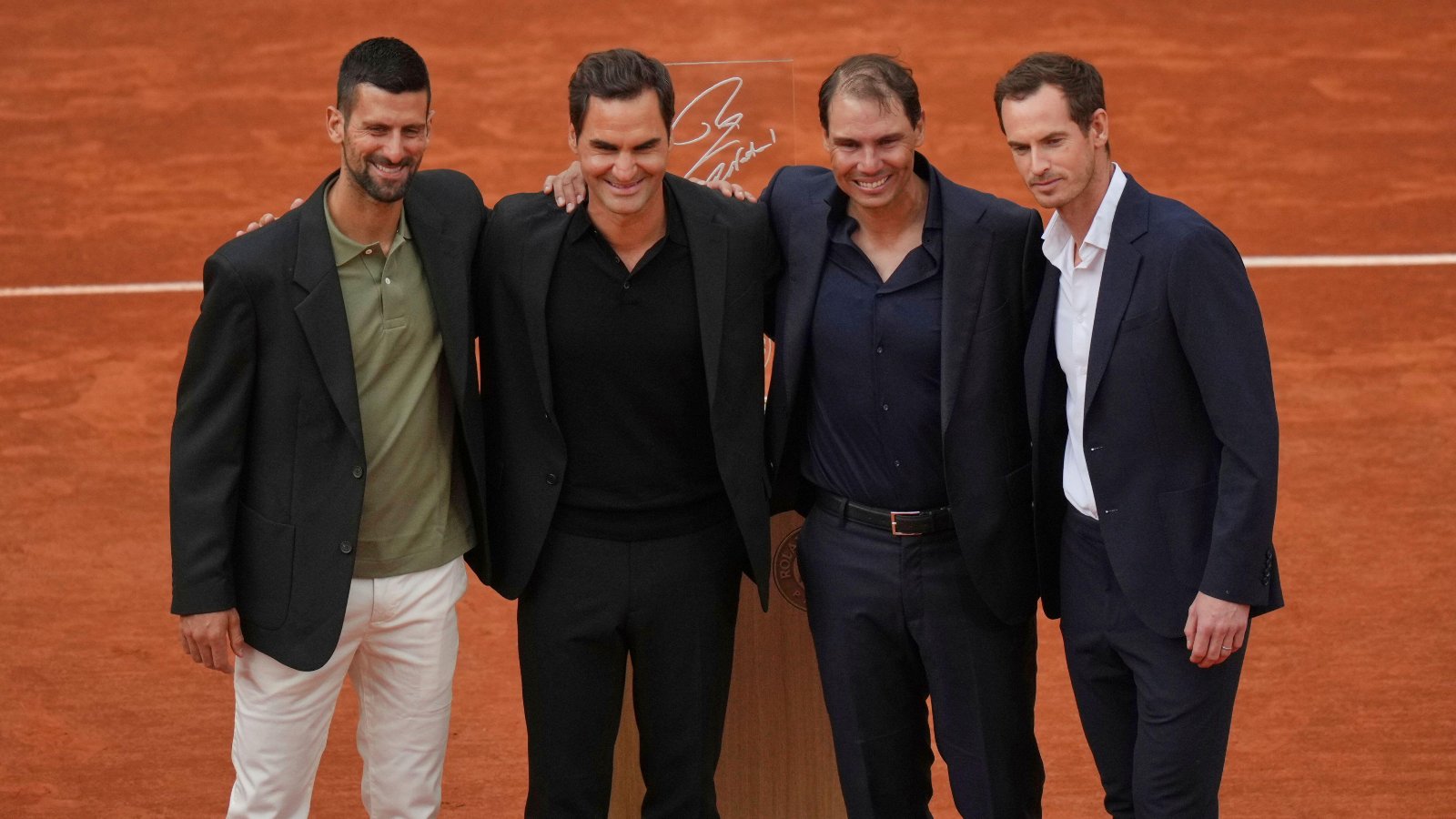
The Last Dance: Final Words
Dear future students,
As you begin this journey into the world of digital literacy, I want you to pause not to hesitate, but to feel the weight of the moment. You’re not just logging into a platform; you’re stepping into a future that is already being written and shared through global conversations. I decided to write this letter differently, Bolded and Italic.
This course is more than a set of skills. It’s a lens. It will teach you how to question, create, and participate with purpose in the digital world. But beyond the assignments and deadlines, I hope you find what I found. In this blog post, I will share with you my reflection over the course. This reflection will include parts of my identity, and you’ll notice how some ideas and images resonate with each other and with the assignments we had.
I needed a deeper understanding of truth in the age of information. And I wish that you, too, will have the confidence to not just be a user of technology, but a conscious and ethical contributor. You’re about to enter an empowered, enlightened, and challenging capsule, and I promise you, you won’t walk away the same.
So fasten your seatbelt.
We are about to make history.
It’s your mission, should you choose to accept.
Let’s start from the very beginning of this semester. I joined this course after the add and drop week at the American University in Cairo. We began by taking a course survey that helped us set our expectations. The survey asked us to rank different traits from our areas of strength to those we wanted to improve.
Actually, one thing I liked most about this course and something I reflected on deeply in my blog posts was how much Dr. Maha cared about our well-being. That personal touch made a difference, and you’ll see it echoed throughout this reflection.
We started by managing our well-being and asking ourselves: Am I okay? Am I good at helping others?
Am I strong at learning new digital technologies?
That last one, for me, was a weakness which is why I joined the course. I wanted to improve in creativity, and Digital Literacy. What did I expect from the course? I wrote: to explore new technologies and gain exposure to other cultural experiences.
In our very first class of Digital Literacy, we were encouraged to express ourselves without fear, without filters. We learned that even a CV can break the mold. That was the beginning of the Alt-CV assignment.
This assignment struck a deep chord with me. I asked myself:
What if a CV didn’t list GPA, internships, or awards?
What if it just ,told my story?
That question reminded me of Anas Bukhash’s podcast, where he asks his guests: “How do you really feel?” When they answer “Good,” he replies, “No, how do you really feel?”
Anas Bukhash أنس بوخش. (n.d.). YouTube. https://www.youtube.com/channel/UCUgpEOv92-iovYJWZi7tT6A
I’ll share with you the link of his podcast, The episode with Egyptian Actor, Ahmed Helmy, that really touched my heart.
https://www.youtube.com/watch?v=7h0yWtHmFoY&t=1891s
I began to reflect on who I really am. I realized I love Mission Impossible. Rafael Nadal. Tennis. James Bond. Ancient Egypt. History. Could I introduce myself with those passions?
I brainstormed. A letter? Too cliché.
A video? Too common.
Then, a poem.
Poetry had been with me since Grade 8. It was always there, quietly waiting. So I asked myself:
Why not? Why not unlock this part of me? What’s the worst that could happen?
So I took a risk. I wrote a poem. And now, let me share it with you.
Its title is: “A Man on a Mission.”
My mind is like a blueprint, precise and refined,
A leader, a thinker, ahead of my time.
Once a king on the chessboard, making my play,
Now I’m building the future in different ways.
With Bond’s precision, Ethan Hunt’s thrill,
I mastered their details. I sharpened my skill.
No task is too great, no dream is too high,
With friends and family standing nearby.
This poem reflected exactly who I am. I value my friends and family. I admire action, excellence, and loyalty, embodied by James Bond and Ethan Hunt. And this Alt-CV opened a new path for me: to be more creative, to step outside the box, and to explore different ways of writing blogs. This is the link for the full poem in the blog post : https://reflect.creativitycourse.org/published/your-mission-should-you-choose-to-accept-it/
I believe this was my first real step in building my digital literacy ladder.
After the Alt-CV assignment, we moved on to building our community agreement. Together, we created a shared set of rules so no one could go beyond the lines. I really liked this part, actually. It felt like we weren’t just a class of students and a professor. We were a team.
We even discussed the syllabus together. We commented on it and suggested edits. From my point of view, Dr. Maha didn’t just teach us she built a team dynamic. She made sure we knew how we’d be graded and what to expect. It wasn’t just a document; it became our roadmap. That was a huge plus.
Then we watched a video by Miss Mays Imad about childhood trauma. This video touched my heart deeply. It reminded me of real people I’ve seen those who faced trauma as kids and carried it into adulthood. Then something clicked. This video connected to something else we studied: the definition of hybridity, and how microaggressions no matter how humble, can be deeply offensive. This is the link for the video if you want to watch it https://onehe.org/resources/trauma-informed-pedagogy/
Let me explain.
We learned how hybridity means cultures, identities, and languages blending together in digital spaces. It’s a beautiful and complex phenomenon. It shows us that the world isn’t made up of fixed borders, but of overlapping truths.
But with every beautiful truth comes a responsibility. This actually reminds me of Peter Parker in Spiderman when Uncle Ben told him before he dies “With every great power, comes Great Responsibility”. We humans are responsible for each other and ourselves. We cant say that we are living solely in this world. We are meant to be here for development and helping each other to grow, not to hinder each other talent.
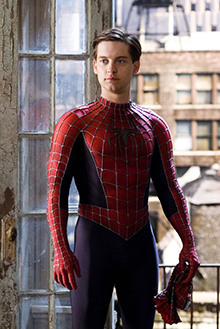
Wikipedia contributors. (2025, May 19). Peter Parker (2002 film series character). Wikipedia. https://en.wikipedia.org/wiki/Peter_Parker_%282002_film_series_character%29
That’s where microaggressions come in. They’re often unintentional remarks or actions but they can hit hard, like invisible wounds. A joke. A casual comment. A burden that a person might carry in silence. You have to understand well. You have to listen. Speak. And lead with empathy. That’s how good leaders rise.
I related this assignment to the second step in my Solyia journey:
active listening,
empathy,
understanding.
Because when you reflect on how to mean well and speak well you realize that words carry weight. You can’t harm someone with words and say, “I didn’t mean it.” That’s not enough. In a professional world, a man is chosen by his words. So yes speak with intention, but also listen with respect. Give others space to share.
Don’t just wait to speak. Think. Feel. Respond. Or sometimes just stay silent. Because speaking with empathy doesn’t mean winning the conversation. It means being emotionally intelligent. It means knowing that sometimes, there’s something more important than being right like preserving a relationship, or showing kindness to a friend. When we talked about speaking and meaning well, we also read and analyzed Lina Mounzer’s article “War in Translation”. I’ll share the link with you if you want to read it but let me tell you this: it moved me deeply. https://via.hypothes.is/https://lithub.com/war-in-translation-giving-voice-to-the-women-of-syria/
This article showed the power of translation. It’s not just about switching words between languages. It’s about choosing which meaning to carry forward. One word can hold so many meanings and the wrong one can twist reality. Let me give you an example. Sometimes, on TV, they translate “Palestine” as a non-existent country. That’s not just a choice of words. That’s a choice of narrative. What stood out most in this piece was when Lina wrote: “When I tell you how my 90-year-old cousin was martyred on his first day fighting on the front lines, do you think us monstrous to have let him go? Or must I add a note to explain how we have come to accept that in war, the desire to fight and the attendant risk of death is something that doesn’t respect childhood?” This reminded me of Queen Ahotep, mother of King Ahmose, who witnessed the death of her husband and her son Kamose, but still had faith that her youngest son would rise and become the liberator of Egypt.
Having faith that everything will be okay.
And if it’s not okay, then maybe it’s not the end. We fight with the power we have,
To protect the ones we love. That is nobility. This actually resonated in the ,Flash, movie when Batman appeared and delivered a speech that still echoes in my heart. Let me tell you the speech he told to the Flash, Its name is ” The Scars We Have”
“Barry, those scars we have make us who we are. We’re not meant to go back and fix them. And there’s nothing broken with you that needs to be fixed. Take it from an old guy who’s made plenty of mistakes. (Batman, Ben Affleck, The Flash Movie 2023) that is the link if you want to hear it: https://www.youtube.com/watch?v=rj9lyKzuJdU
That is to say, even superheroes suffer, what about us as normal human beings? sounds metaphoric
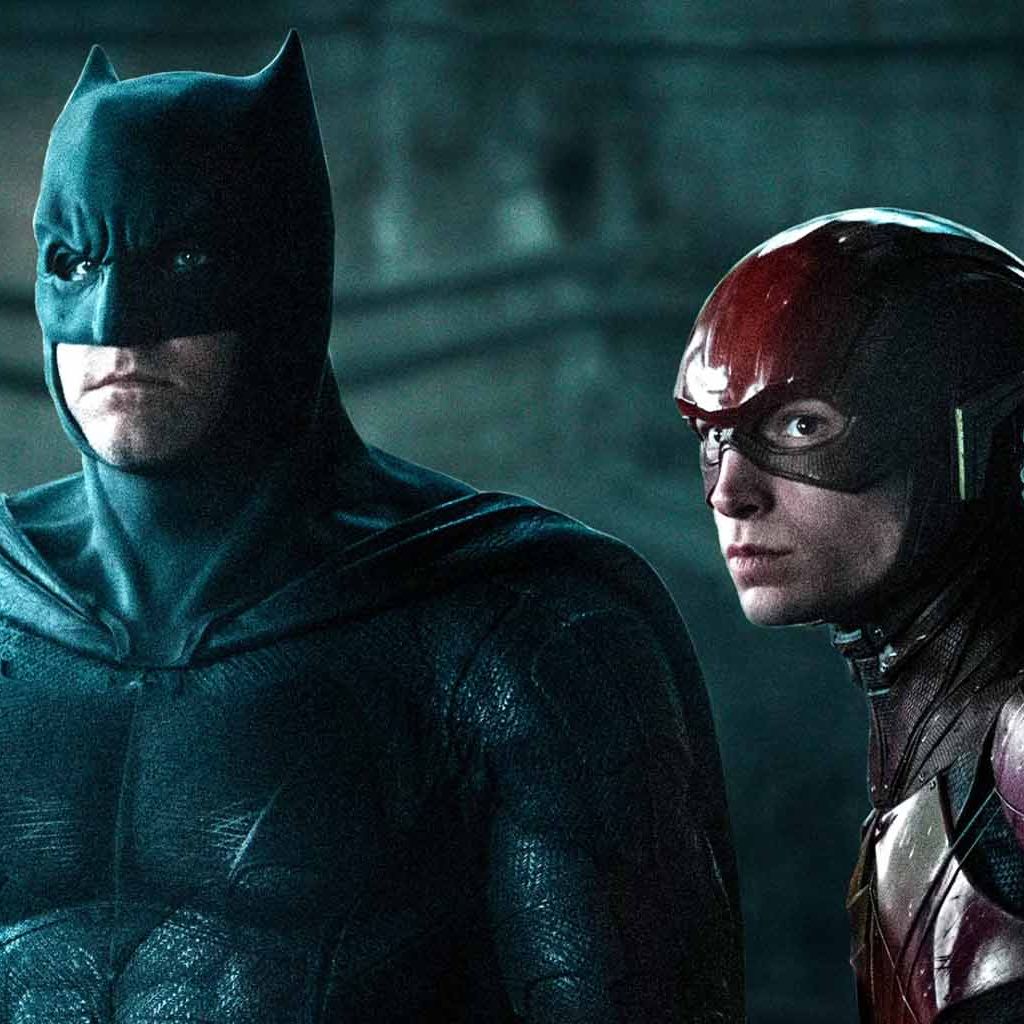
Chacksfield, M. (2022, January 7). Ben Affleck teases “best-ever” Batman scene in The Flash. Shortlist. https://www.shortlist.com/news/ben-affleck-teases-best-ever-batman-scene-in-the-flash-403072
Another line from Lina stuck with me:
“They leave behind their houses, their streets, their cities, their countries, their dead, and they set off into the unknown, carrying the memory of all they’ve left behind in their hearts and their tongues even if they carry nothing else.”
This made me realize: war doesn’t just destroy homes. It creates memories that weigh heavier than ruins.
And if I ever had to carry the blood covered body of someone I love, I wouldn’t leave them behind.
Memory isn’t lost.
People who love, never lose. We live with our memories.
And those who live with no dreams left to accomplish?
They’re the ones who leave no trace. Thats what my Uncle and Grandfather told me before they pass away. I believe they are 100% correct. They are still remembered and engraved in the hearts of all people they dealt with. They really meant to me alot. Without God first, then them I would not be the person I am today.
I want to thank them in this Blog.
This reminded me of a quote from Batman Begins:
“It’s not about who you are underneath.
It’s what you do that defines you.” (Batman Begins, 2005)

Batman begins wallpapers. (2023, September 1). Wallpapers.com. https://wallpapers.com/batman-begins
So even in suffering, we must find the strength to refresh, to adapt, to keep going.
War doesn’t just change politics, it changes people. It makes you ask:Will I have to leave my home? Will I lose someone I love? Will I feed my family? Where do I even go? There’s no time to die because adrenaline keeps you awake. Fear reshapes your very body. But in the end who really wins a war? No one. And even in fiction like Mission Impossible: Dead Reckoning, where Ethan Hunt faces a nuclear threat there are losses. He loses Luther. He loses Benji. He loses his wife. But still, he chooses peace. He says no to war.
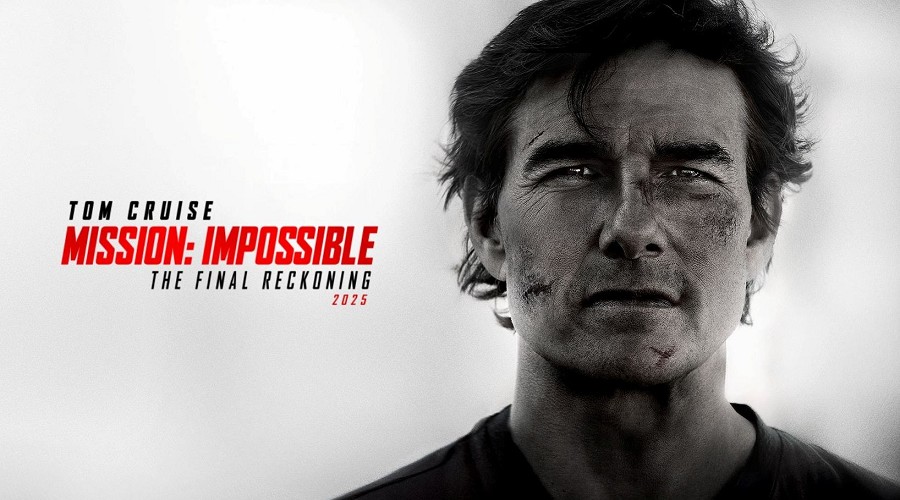
Creechy, & Creechy. (2025, April 7). After Nearly 30 Years Mission: Impossible is Ending. 4CA. https://www.4ca.com.au/trending/movies/after-nearly-30-years-mission-impossible-is-ending/
Same with James Bond in No Time to Die. He gets infected with a genetic poison. He doesn’t return home. He stays on an island. He sacrifices himself to destroy the poison. Again, he says no to war.
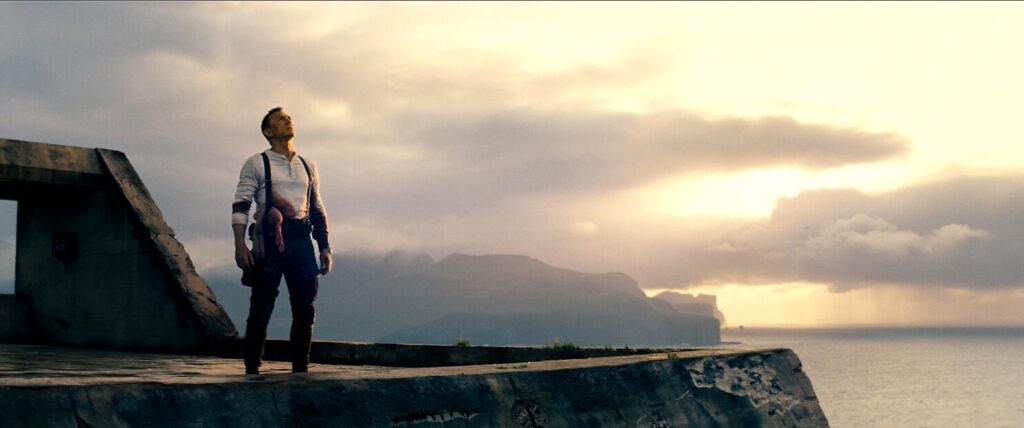
Jacobsen, H. (2025, April 4). James Bond Faroe Islands scenery | Guide to Faroe Islands. Guide to Faroe Islands. https://guidetofaroeislands.fo/history-culture/james-bond-faroe-islands-scenery/
Second point: Even in translation, meanings shift.
Like how in Macbeth, or Julius Caesar, characters like Brutus speak in riddles and puns only to end up killing the ones they once respected. So yes, even words can become weapons.
As we dove deeper into the course, we started exploring the theme of identity. We asked: What are my strengths? And how are they ranked?
When I did the exercise, I discovered that spirituality was my top strength having coherent beliefs about a higher purpose, knowing where I fit in the larger scheme of the universe, and finding comfort in the belief that everything happens for a reason. That discovery resonated with me. I’ll give you the link for the survey to do and let me know your strengths! https://www.viacharacter.org
Then came one of the most powerful classroom activities. Dr. Maha handed each of us five cards, each with a different label things like Muslim, Rapper, Well-built, Rich. We went outside. We all stood on the same line. Then she started calling out: “If you can afford a good living step forward.” “If you cannot, step back.” With every step, we saw how privilege separates us, how people are shaped by the cards they’re dealt. That day, we weren’t just students. We were mirrors to society. That game showed me: that identity is not just a label. It shapes opportunity. And not knowing your strength? That’s the biggest weakness.
We also watched a TED Talk by Taiye Selasi: that is the link of the TED Talk if you want to hear it “https://www.youtube.com/watch?v=gT5OpU2PlS4“, and that is the link to my blog post where I reflected on this talk”https://reflect.creativitycourse.org/published/echoes-of-identity/” Moving forward, Selasi said something that stayed with me: Self-belonging is rooted in the places we visit and influenced by the people we meet there. She reminded me that we are multilayered beings, shaped by experience and human interaction. That message struck a deep chord; because I lived it. When I stayed in Germany for three months, I began to adapt. To their routines. Their food. Their language. I started eating like them, acting like them. But that didn’t mean I lost myself. I’m still Egyptian. Arab. African. Adapting doesn’t mean erasing your roots. It means growing new ones. And that’s exactly what great performers do. Cristiano Ronaldo spent 20+ years in Europe. Then he moved to Saudi Arabia. He didn’t just survive there, he thrived. He adapted to the climate. To the culture. To the traditions. And because of that, he achieved greatness without losing his identity.
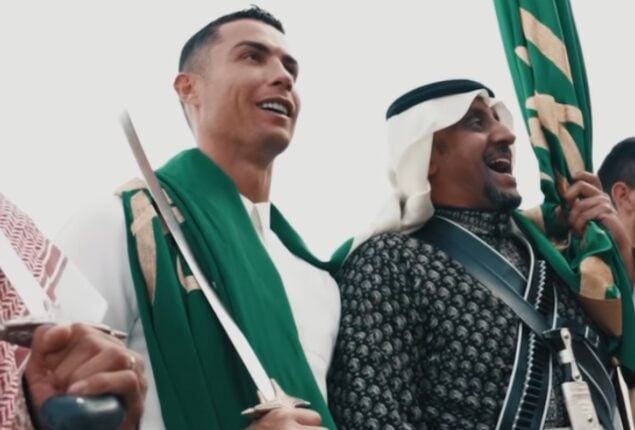
Latestly, T., & Latestly, T. (2023, February 23). Cristiano Ronaldo wears traditional Thobe dress to celebrate Saudi Foundation Day with Al-Nassr teammates. LatestLY. https://www.latestly.com/socially/sports/football/cristiano-ronaldo-wears-saudi-traditional-dress-to-celebrate-saudi-foundation-day-4874334.html
That’s why also Jackie Chan once said: “Be like water formless, shapeless. Adapt to everything.” This message? I carried it with me.We have to be flexible. We have to adapt. Because the more experiences we have, the more complete we become. If you ask me what my favorite “scene” to hear or watch is, I’d say:
Watching myself 10 years from now. Will I have changed? Adapted? Grown? Did I stay true to who I am, Really? I wish I could record this moment and look back later. To see if I lost anything. Or if I simply evolved.
Then we reached a very exciting part of the course which is exploring different AI tools.
I actually wrote a blog post titled “Who Is the GOAT of AI Tools?” and I’ll share the link with you “https://reflect.creativitycourse.org/published/which-is-the-ai-tool-is-the-real/“. But let me walk you through the journey here.
In the blog, I compared four major tools:
Perplexity, ChatGPT, Consensus, and Keenious.
What did I discover?
ChatGPT https://chatgpt.com/
is versatile and conversational. It can handle numerous topics at once and provide good responses across different areas. The only drawback is the lack of direct citations, which can distort academic accuracy sometimes.
Keenious https://keenious.com/
is academically oriented. It gives you reliable academic sources and is great for writing research papers. However, it’s limited in scope and requires subscriptions, which may not be ideal for everyone.
Consensus https://consensus.app/
is also rooted in academic credibility. It provides answers supported by actual peer-reviewed papers but it’s not always comprehensive. It depends heavily on the databases it draws from.
Perplexity https://www.perplexity.ai/
shines in fact checking and knowledge retrieval. It’s frequently updated and pulls from the web, making it fast and relevant. But again, it depends on the quality of web sources and if the Internet is hacked or misinformed, Perplexity could reflect that error.
Let me rank them for you based on my personal experience:
- ChatGPT is the real GOAT
- Perplexity
- Keenious
- Consensus
I want to hear your rankings too.
Personally, I’ve used ChatGPT and Perplexity together for some serious academic work especially for the environmental impact assessment of smart water distribution networks which was my Thesis I project along with my respectful colleagues: Moaz Mohamed ( The Team Leader), Faris Elnabarawi, and Anas Abdelnaby And honestly, GPT & Perplexity worked like magic. A great combo. I also found it fascinating that Dubai partnered with OpenAI, offering ChatGPT Plus to all citizens. They’ve even integrated it into their public systems. let me share with you the link of the news if you want to read more about it “https://www.businesstoday.in/technology/news/story/uae-makes-chatgpt-plus-subscription-free-for-all-residents-as-part-of-deal-with-openai-477948-2025-05-27“
This shows something powerful:
AI isn’t just a tool. It’s a partner. And I believe ChatGPT will go way further than any other AI tool in the near future.
Then came the fun part of the course game design.
How did I come up with the idea for my game? Actually, as I told you earlier, the Alt-CV was the first step of the ladder. It opened a path that led to everything else. I started wanting to create a game that combined all aspects of who I am my love for storytelling, history, leadership, and strategic thinking. So I thought:
What if I turned this into a chess-like game with characters from my favorite worlds like James Bond, Tom Cruise, and others? Unfortunately, I couldn’t do it as a chess board, but I made it more interesting as you will see along the blog!
Let me take you through it.
In Phase 1, before building my own game, I played seven games; each one taught me something different. Let me walk you through all seven, and this is the link of my blogpost if you want more reflection and ideas! “https://reflect.creativitycourse.org/published/pharaohs-gambit-the-rise-of-a-chess-warrior-part-i-reflection-on-games/“
- Spent https://playspent.org/html/
This game puts you in the shoes of someone living in poverty in the U.S. You face tough financial decisions every day. I played it twice and made it through 30 days without losing balance. But it opened my eyes. I saw how one small decision could spiral into disaster. This game? It was the GOAT. It reminded me to be grateful and that some people can’t even afford a diagnosis for a heart condition. That is to say; Gratitude isn’t a feeling, it’s a responsibility.
- BBC Syrian Refugees Game https://www.bbc.com/news/world-middle-east-32057601
I played it twice, choosing two different routes: one from Egypt, the other through Turkey. In one path, I had to sacrifice my sister to survive. Then I was scammed by a man who left me with no money.
It made me realize: no refugee’s journey is simple. Their choices are about survival; not comfort.
- The Empathy Toy (played in class) https://twentyonetoys.com/pages/empathy-toy?srsltid=AfmBOooOMj0P9nXxj2FezCeHCes6kCRKEQRlW73PvDmnVBDgqnn2Jo4S
I was blindfolded. My friends built a model I had to explain to another blindfolded friend.
At first, it was hard. But as we connected, we managed to build part of it, and then our classmates helped complete it. This game was eye-opening. It taught me how people with disabilities experience life. How they explain what they can’t see, and still do it effectively. Empathy is not just seeing someone’s pain, it’s feeling it.
- October 1, 2020 https://caitkirby.com/downloads/October1st2020.html
In this game, I became a professor during the COVID era. The university refused to let me teach online even though I had a vulnerable child. Eventually, I got infected, but still had to go to class. It showed me how inhumane systems can become, even in times of crisis. And how policy needs compassion.
- Voter Suppression Train https://www.nytimes.com/interactive/2016/11/01/opinion/voting-suppression-videogame.html
I played once as a white U.S. citizen and the wait time: one minute. Then I played as a Black citizen, and I waited endlessly. I wasn’t even allowed to vote. This game screamed one truth: Democracy without equality is not democracy.
- Manufactured by Evil (by Mr. Omar and Ms. Nurhan, 2019) https://docs.google.com/presentation/d/1bDaSkTsljnGfVV-MF0prClY8avdriIT5xRWliV0WxlI/edit#slide=id.p
This game was about plastic pollution and solid waste management. It resonated with me even more thanks to my Solid Waste Management course with Dr. Mohamed Zayed. It showed how plastics often dismissed actually hold economic value, if managed correctly.
- Losing a Parent (by Miss May, 2019) https://docs.google.com/forms/d/e/1FAIpQLScff3zm_c_vwAc5Blgb9rpV2CQIoMrr6kUVqESA-E-MM7KEGw/formResponse
This game was deeply emotional. I played a character who had to deal with the death of a father. The heaviness,the silence in the family, I chose to be honest, and to carry my family on my shoulders. Because that’s what real strength looks like. Some games break your routine. Others break your heart.
And then came my own game; my proudest creation:
Destiny in Choices: So You Choose to Accept
I created 367 slides using Google Slides. I designed every part of it myself, from the logic to theinserting of the background music, to the dark-text contrast (to meet accessibility standards). I even dreamed of adding voice narration for more immersion, especially for differently abled players. Let me share with you the link of the game https://docs.google.com/presentation/d/1szgP42xFVStPaBRjWAKfjhLtcQ5MQTsCY8Vh8GRVwqY/edit?usp=sharing
The game has three eras:
- BC Era : Cleopatra VII, Alexander the Great, Socrates
- Old Era : Joan of Arc, Galileo, Suleiman the Magnificent
- Modern Era : Donald Trump, Adolf Hitler, Anwar Sadat
Each character has 10 scenarios.
You, the player, choose how to respond. Your choices change the story; and the fate of civilizations.
The goal?
To understand that a voice and a choice, can change the world.
History doesn’t remember what you feared.
It remembers what you chose.
As Tom Cruise said in Mission Impossible: The Final Reckoning: I need you to trust me, One Last Time. Trust me, I’m so excited to see future students play it, experience it, and give their own feedback. Also, that is the link for my blog post about the game if you want to know more “https://reflect.creativitycourse.org/published/destiny-in-choices-should-you-choose-to-accept/”
Last but not least, I want to tell you about a session that was as eye-opening as it triggered our creativity. Copyright and Creative Commons activity.
Dr. Maha gave us a simple but powerful exercise: create a story using only Creative Commons images, which are legally safe to reuse.
My respectful friend Omar and I accepted the challenge. We created a story using four pictures:
- A man boarding a plane
- A mysterious gun
- Playing Chess
- Finding himself on an island
 Source from Dr.Maha’s Presentation
And just like that, we had a short, thrilling visual story. This activity taught me the real difference between copyrighted images and Creative Commons media. We explored tools like Flickr and Google Images with license filters. We learnt how to use visuals responsibly without violating ownership rights. That lesson stayed with me, especially when I was working on my game. Every image I used came from Creative Commons sources. Because ethics matter, even in design. We also discussed AI tools and their citation accuracy. While I love using ChatGPT, it doesn’t always provide proper references. That’s something I had to be mindful of, especially in academic contexts. Another important discussion we had was about the Socratic conversation which is a dialogue based, inquiry method inspired by Socrates. This approach challenges assumptions, explores complex ideas, and encourages critical thinking. And here’s what I realized: ChatGPT is not ideal for Socratic dialogue. Why? Because it tends to answer, not ask. It doesn’t push you to reflect, it gives you what you want, not what you need to discover for yourself. I said in this session is that I used to try the Socratic conversation with GPT in the Contracts course with Dr. Mohamed Amr Hassanien, and it did not give me the right answers upon law, it gave me the answer I needed which was totally wrong.
The best teachers ask questions, not give answers.
And the best conversations make you think, not agree.
Then came something that truly shocked me:
AI’s environmental impact. I never imagined that training AI models requires clean water to cool servers and data centers, and that every time we say “please” to AI or phrase things politely, it may increase the server’s load; requiring even more water to maintain temperature. That fact hit me hard. And in that moment, I realized: that we often treat AI as a limitless tool. We need to use AI intelligently. Not just functionally.
We ended the course with our Digital Literacy Presentation, which brought everything full circle. It tied together every skill, every experience, every “oh yes, I did not know that” moment from the semester. Let me share the presentation with you “https://docs.google.com/presentation/d/1T4OiCG3i4JgYHE9zMvAjwesHixrn9pU0b4psG8COrNo/edit?usp=sharing“
We learned the difference between digital skills and digital literacy from Dr. Maha’s Article “https://www.literacyworldwide.org/blog/literacy-now/2016/02/03/knowing-the-difference-between-digital-skills-and-digital-literacies-and-teaching-both“
- A digital skill is inserting an image into a document.
- Digital literacy is knowing why you need that image, how it will be interpreted, and who your audience is. (Bali,2016)
That’s when it hit me: this course isn’t about tools. It’s about intention. About being a mindful communicator in a world overflowing with information. I was especially amazed when I read Dr. Maha’s article about people using Twitter as civic literacy a tool to protect themselves from government censorship. That’s when I understood the real power of being digitally literate. And you know what else blew my mind?
I was humming John Cena’s entrance song and Google found it. Let me share with you John Cena’s song if you do not know it “https://www.youtube.com/watch?v=svjMiqVeiG8“. Just from my hum. That’s digital magic. But behind that magic, there are data, code, and resources including water, electricity, and carbon.So after everything we learned, I paused to ask myself: What were the most impactful moments for me?
There are other highlights I want to end the reflection with. What I want to begin with is the folded chair activity. I did this activity with my respectful friend, Rafik. What was this activity about? there was pictures of beach, street, old cafe, and cinema. There was different types and colors of folded chairs. What was our mission? Our mission was to match and see whether the chair will be applicable to be put in such place? and who would have this kind of chair? This activity triggered our creativity. But the take away from this activity was that what is comfortable for one group is not necessarily comfortable for others. I believe this activity was pulling the thread for the Solyia experience as well. I know you’re asking now why? This activity promoted the trait of respecting other opinions. From my point of view this is one of the most crucial traits one should have to participate in Intercultural exchange programs such as Solyia.
I also want to mention the session of Dr.Bassem. This particular session I loved as I like storytelling and creating different scenarios from nowhere. Dr. Bassem gave me and my respectful friend Omar a picture of a man and a woman holding each other hands and going through the sea in a smart casual clothes. Our mission was to make a story from this picture. We named them Omar and Salma. Omar was from a prestigious family and Salma was from a normal family. The purpose of the story was that Omar’s father did not want him to marry Salma. So Omar decided to step out from his father’s shadow and take Salma and marry her and live happily ever after. Actually what Dr.Bassem was trying to emphasize is that we humans can have different perspectives of the same thing, so narrating and storytelling is crucial in one’s life. I believe in our picture we did not discuss the socio-economic part that he was stressing on. But my respectful friends, Malak, and Hana, highlighted this when they talked about a picture of a young man pictured in the streets where they said that he did not have the chance to travel abroad and he is sitting with his sisters and that he is a hard worker. The takeaway from this is that you can infer anything from your view or by listening to someone who narrates stories OR TRANSLATES them for the purpose he needs. And now we can connect to Lina Monzer’s Article about translation. But the bottom line is that socio-economic equality is needed. We need to have equal access for jobs, resources and rights despite one’s gender or identity. Also, we can now connect to Salie’s TED Talk. At this point we can tie another knot of the rope.
Additionally, I really liked the part when we started noticing the difference between fake news and real news, fake faces and real faces. Also, I really liked when our respectful friend Malak in her Digital Literacy presentation gave us the chance to know the difference between REAL WORDS & FAKE WORDS. I did not even know that there can be fake words. I believe anything now can be done using AI. Growth is needed so that we humans, would not be depleted. This part of knowing fakes Vs. reals triggered a part in me that said how about the people with less recognition perceive life nowadays? will they really think of all news around us as real? A basic example is the trump picture with KAABAH in MECCA here is the picture:
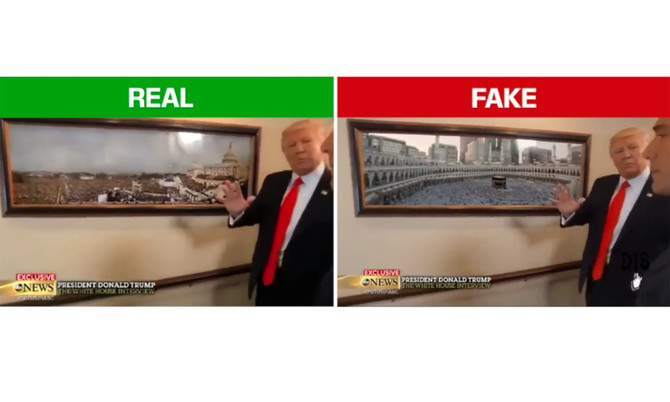
Arab News. (2017, March 4). Trump’s “praising Makkah” video a hoax, real one emerges. Arab News. https://www.arabnews.com/node/1060596/session_trace/ajax/aggregate
I believe non educated people will trust the fake image but educated ones will not. It may also depends on the culture and Identity as in class we dicussed that Dr. Maha showed this picture for Asutralian people and they did not know the KAABAH so they said okay. However, in the MENA region, I believe we will not think for a second that it is real as we know Trump’s character. So, education is needed and valdiation of information is crucially needed in the age of AI. You could see the article or even the recording of the TV news on the day to validate the information.
More to mention, the part in the course when we discovered how AI affects our profession, was a crucial one as I made interviews with faculty and in field engineers. The discovery was insane. Literally AI can save millions of dollars. As Eng. Karim Abdelhady said, he used AI to run 10,000 scenarios and there was a black swan even where the project will be delayed. By taking the proper risk mitigation strategies. They managed to save millions of dollars. Also, from my point of view, AI can not replace us as engineers but rather be a plus-plus tool that enhances the person who use it. AI is a tool to help us, not to hinder us. If you want to know more about my experience with AI in my profession, this is the link of my blog post reflecting on how AI is used in our Construction profession “https://reflect.creativitycourse.org/published/ai-in-my-profession-ai-in-life/“
The honorable mention is the Solyia experience. Four weeks. One group. Multiple time zones. Diverse beliefs. And one goal which is connection beyond borders.
Week One was all about setting the foundation for constructive dialogue. We discussed core values like active listening, mutual respect, and openness. We shared our personal goals for the program, mine were:
- Building global connections
- Improving communication skills
- Getting exposed to new mindsets
Then we dove into a unique topic: AI across cultures. We explored whether AI is here to replace or enhance human capability. Some of us embraced its potential. Others were more cautious, especially about ethical boundaries. We also talked about tools like ChatGPT, and how they’re learned and used differently across the world. Finally, we proposed future discussion topics like gender roles, social media, education, and U.S. politics.
In Week Two, we got more personal. We shared our food traditions, and I loved speaking with an Italian partner about how our cultures express identity through cuisine. We also practiced active listening through structured dialogue exercises. We reflected on barriers to asking questions like shyness versus listening skills and identified our top two personal traits.
Mine were:
- Problem-solving
- Communication
We then discussed the idea of identity threats, and how external pressure can silence inner expression. Finally, we presented our group project on gender and education.
I led interviews with Moaz and Yahia:
- Moaz spoke about barriers for girls, including early marriage, school dropouts, and pressure on boys to perform.
- Yahia highlighted outdated teaching methods and gender-based violence.
Together, they advocated for inclusive educational policies that empower all genders.
By Week Three, the connections were deeper and more honest. We shared our favorite cultural holidays Eid, Easter, Christmas, and what they meant to us. We discussed our motivation in life, and I said: “The journey itself. Resilience. And being remembered as a good person.” We explored critical thinking, especially how open-ended questions fuel learning. One of our debates was formal education vs. life experience.
I defended formal education, saying: “Without it, you walk like a blind man.” We also tackled an ethical dilemma: Should someone get married without a degree? It led to a really thought-provoking discussion.
Week Four had a surprise, a new facilitator who led us through a creative session. We started by drawing animals that represented our inner voice, then discussed what morality and gut feelings meant to us. We also shared our favorite movies, and I talked about Superman, because he represents hope to me. We wrapped up by reflecting on the importance of emotional intelligence in global conversations.

Agar, C., & Agar, C. (2025, May 21). David Corenswet strikes an iconic pose in a new look at Superman. ComicBook.com. https://comicbook.com/movies/news/superman-2025-movie-david-corenswet-pose-image-fortress-solitude/
I suggested adding emotion check-ins, like how Dr. Maha Bali does at the start of class, to create safe spaces for expression. One thing I’ll never forget: I was honestly disappointed that we couldn’t discuss the Palestine issue freely especially when it mattered most. But even so, I walked away as a better active listener, a stronger global communicator, and someone who built real international relationships. Most importantly, I realized this; Empathy has no time zone. And connection doesn’t need a passport. Now I can tie the rope. We can now relate from the very beginning of the course since othering, microaggression, identity, and socioeconomic equality to the Solyia experience. One more thing, I want to give a shout-out to Abdullah Salam and his “Grow Talks” podcast. It’s brilliant. Check it out. “https://www.youtube.com/watch?v=uwXrzjWtNao“
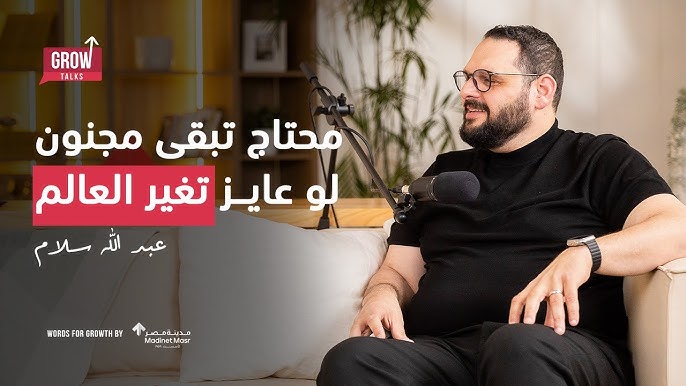
Madinet Masr. (2023, October 11). الحلقة 17 عبد الله سَلّام | قصة أصغر رئيس تنفيذي لأقدم وأكبر شركة تطوير عقاري في مصر [Video]. YouTube. https://www.youtube.com/watch?v=uwXrzjWtNao
That’s the magic of Soliya. If you want to know more about my Pre Solyia reflection this is the link for the blog post “https://reflect.creativitycourse.org/published/pre-solyia-reflection-high-expectations/“
Also, If you want to see the Post Solyia reflection blog post here is the link “https://reflect.creativitycourse.org/published/post-solyia-reflection-did-we-meet-the-expectations/“
Most Impactful Learning Experience
Definitely the Empathy Toy https://twentyonetoys.com/pages/empathy-toy?srsltid=AfmBOooOMj0P9nXxj2FezCeHCes6kCRKEQRlW73PvDmnVBDgqnn2Jo4S
I didn’t know if I’d be able to describe the model to my blindfolded friend. But we did it. Together. And it changed how I view communication, perspective, and trust. We all have strengths. But they shine brightest when we put them in the right place. Here’s the blog post where I am reflecting on the games I played “https://reflect.creativitycourse.org/published/pharaohs-gambit-the-rise-of-a-chess-warrior-part-i-reflection-on-games/“
Most Useful Academic Assignment
The AI tools comparison blog. Now, whenever I write a paper or do research, I know when to use ChatGPT, when to trust Perplexity, and when to turn to Consensus or Keenious. Also, the technology in the class room was a perfect combination as I liked the fact that we use smart screens to look at not only focused on a single point. I liked the fact that we also used them to write on despite the fact that the some times were not good in writing. But overall, I really liked the class room and I hope in my major we would integrate such class rooms in our learning experience as it allowed us to connect and be more like a team when we lead on the board.
Here are the links for every AI tool.
Perplexity https://www.perplexity.ai/
Consensus https://consensus.app/
Keenious https://keenious.com/
ChatGPT https://chatgpt.com/
Also, here is the link of my blog post discussing the differences and choosing the best one based on my point of view “https://reflect.creativitycourse.org/published/which-is-the-ai-tool-is-the-real/“
Most Valuable Social Takeaway
The Soliya Experience.
I actually made real friends. We have an Instagram group and we still talk. I believe these connections will grow into long-term relationships. Maybe I’ll visit their countries. Maybe they’ll come to Egypt. I’ll share with you now the PRE & POST Solyia Exprience blog posts.
PRE Solyia “https://reflect.creativitycourse.org/published/pre-solyia-reflection-high-expectations/“
POST Solyia “https://reflect.creativitycourse.org/published/post-solyia-reflection-did-we-meet-the-expectations/“
Most Relevant Career Skill
Using the right AI tool for the right job
In the last class, we learned that the right tool leads to the right answer. This will help me a lot in my career especially in AI-integrated industries. Because timing + wording = the perfect output. Also, here is the link for my blog post where I discussed how AI impacts the construction profession “https://reflect.creativitycourse.org/published/ai-in-my-profession-ai-in-life/“
If someone asked me to prove my growth in this course, I’d show them three things:
- My game: Destiny in Choices to show how leadership and moral decisions shape history. https://docs.google.com/presentation/d/1szgP42xFVStPaBRjWAKfjhLtcQ5MQTsCY8Vh8GRVwqY/edit?usp=sharing
- My POST Solyia Blog to inspire others to connect beyond borders and comfort zones.”https://reflect.creativitycourse.org/published/post-solyia-reflection-did-we-meet-the-expectations/“
- My AI Tools Blog to prove that we can and should use AI ethically and powerfully. https://reflect.creativitycourse.org/published/which-is-the-ai-tool-is-the-real/
Now, if I were to improve this course, here’s what I would change:
- Replace listening to TED Talks with Student Led Talks
Instead of watching TED speakers, let’s become TED speakers. Let us create our own talks using AI tools, also to enhance our storytelling and public speaking skills. It’s time to move from consumers to creators. AI era will shift the world 180 degrees soon
- Start Soliya from Day One
The intercultural experience should begin at the very start.Why wait to connect? If we bring international students from campus into our sessions, we can build relationships from the ground up. Baby steps. Deeper conversations. Stronger bridges. And smoothly building up for the Solyia zoom sessions.
- Add Digital Field Trips
Imagine visiting Italy virtually through VR. Exploring ancient cities, museums, or the place where ROCKY BALBOA was running at in Philadelphia without leaving your seat. That would make the intercultural element even richer. It would blend digital literacy with cultural immersion.

Glessner, R. (2023, February 24). Visiting the Rocky Statue and steps in Philadelphia. PA Bucket List. https://pabucketlist.com/visiting-the-rocky-statue-and-steps-in-philadelphia/
Who Should Take This Course?
Someone committed, curious, and ready to grow.Someone who wants to be usually updated with AI. I believe all majors are welcomed to this course. We all need to be digital literate and AI grows everyday and we need to grow with it. This course is the right chance to grow in a world where AI is a tool and a partner.
Someone like you. Yes you, the one who is reading!
At last without Boldness, I put the header picture of Rafa. It was the last dance for RAFA, maybe the final words at Philippe Chatrier court. And these are my last words in this letter for you my friend.
Best wishes,
Your Friend,
Marwan.


Provide Feedback