Hello and welcome to my blog. Here is my final game reflection.
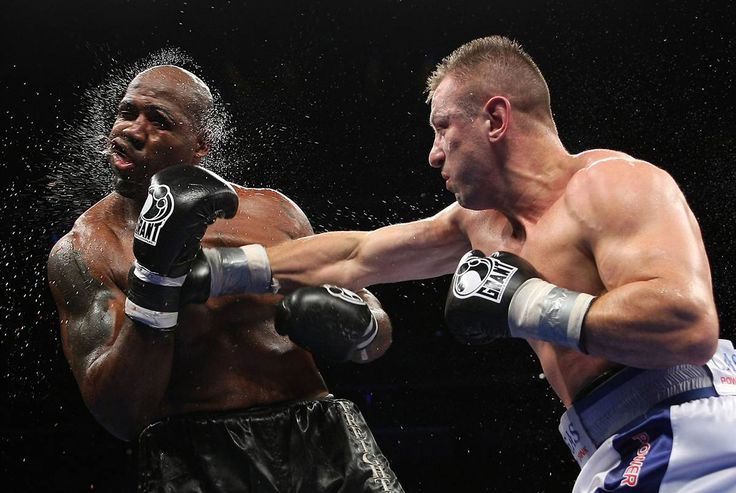
At the beginning of this project, Abdulrahman and I decided to collaborate and develop our game. After forming our group, our professor asked us to select a topic. We both wanted the game to be real and meaningful, so we chose a topic based on our real-life experiences: balancing academics and sports. As student athletes, we have spent the last six or seven years juggling between sports and education, and in my case, I have also taken on roles as a coach while studying. Though we are participating in different types of sports, Abdurrahman practices non-contact sports, while I participate in contact sports. We both felt it would be more appropriate to design the game routes according to our individual personal experiences. After that, I felt that the game’s outline was starting to become visible.
Initially, our doctor told us that she had discovered that an AI such as POE might be able to create the game for us. This was a pleasant idea that would be time and effort-saving, so we started to develop questions and paths to try to generate it on AI. We expected that the AI would make a complete and efficient game, but unfortunately, it didn’t turn out to be as expected. The tool generated very few questions (three or four) from the ten we each requested, and after that, it didn’t respond anymore. We even tried more than one AI tool, but nothing managed to generate the full version. At the end, it even asked for payment to proceed, which was frustrating, especially since we observed other classmates succeed with similar tools and managed to generate the full game. Despite our disappointment, we did not give up. We switched to a more stable platform: Google Forms. The title of our game is “Student-Athlete Dilemma: The Price of Sacrifice”. We believed that this title was engaging and represented the game topic. Creating the game took more than 10 drafts to reach the final version, which was time-consuming, but it was important for the structure and flow of the game. We eventually presented our draft to our colleagues for feedback. Despite the game not being fully complete, I was happy with what we had accomplished. Our peers enjoyed the game and tried both options (contact and non-contact sports). They suggested improving the scoring system because it was not visible at all times, and requested us to use a better quote at the end. Sadly, Google Forms didn’t allow us to show score calculations as clearly as we wanted. Nevertheless, we worked on the feedback we got and started to work on the final quote to be more powerful, and we also followed our doctor’s suggestion to update the labels from “Violent” and “Non-Violent” sports to “Contact” and “Non-Contact” sports, which we agreed sounded a lot more appropriate. If we had more time, we would have considered developing the game independently or trying another platform that had more control over visuals and scoring. Although we did attempt to code from scratch, we soon realized that the process would be extremely time-consuming; hence, we chose to continue with Google Forms as a solution.
Throughout this process, I learned a lot, not just about game design but also about decision-making, flexibility, and perseverance. I had to be creative in thinking about branch paths and how to guide the player from one scenario to another with consequences that have meaningful outcomes. Most importantly, I learned that technology can be useful, but it is not always trustworthy, and that sometimes the best option is to work on something hands-on with effort. Despite all the drawbacks, we never lost hope, and I am proud of the result.
Play the game from here


Provide Feedback