Hello Guys,
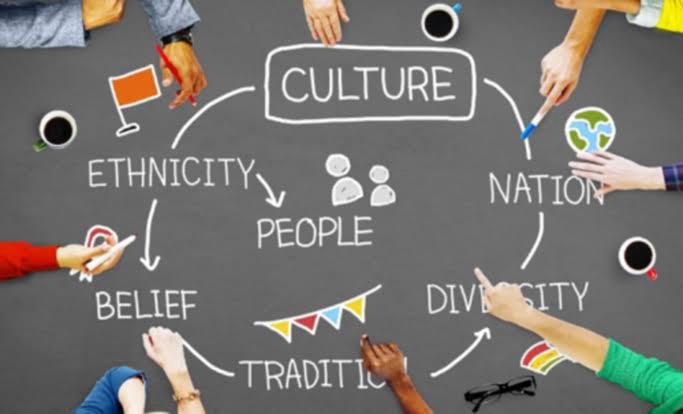
Welcome back to The Real Razan. I will enroll into a course named Soliya. It cones ts student from all the globe and they share their culture, diversity a beliefs. Here is my pre reflection and hope you enroll too.
Reflecting on the knowledge I have gained during this course on identity, prejudice, othering, and empathy which will help me understand how these ideas shape our contacts for the Soliya. The materials I have read and seen changed my mindset and was an eye opener for me. For example, Maya Imad’s presentation on trauma-informed teaching, Chimamanda Ngozi Adichie’s TED Talk The Danger of a Single Story, Binna Kandola’s research on bias, and The Problem of Othering by Powell and Menendian. They pointed out the need of recognising people’s diversity, facing up to my biases, and encouraging empathetic communication. I seek to put all of this into practice when I interact with Soliya program participants.
Having spent much of my life alone as an only child and valued that time, I see the need for self-awareness. Born in the United States, raised in the UAE, and originally from Upper Egypt, My experiences in a variety of cultural contexts have influenced my point of view and how I interact with individuals from various backgrounds. In addition, strengthened my respect for variety and other people’s perspectives.
Mays Imad’s talk made me think about the emotional aspects of communication and how trauma could affect our relationships. Another enlightening topic was Chimamanda Ngozi Adichie’s The Danger of a Single Story. It highlighted for me how fast individuals can be categorized according to their origins into basic stereotypes. My Upper Egyptian ancestry, along with my experiences living in both the UAE and the US, have revealed to me how assumptions might result from my background. I connect with Adichie’s view of valuing people in their complexity, and I want to approach Soliya from that angle—looking beyond superficial differences to promote a greater knowledge of others.
Binna Kandola’s investigation of bias made me consider the prejudices I could bear unconsciously. Having traveled through several settings and interacted with many different cultures, I recognize the continuing need to examine my unconscious prejudices. Kandola’s observations strengthened the idea that the first step to eliminating these prejudices is awareness, and I am committed to this self-examination before starting the Soliya trip.
Finally, The Problem of Othering helped me to see how social institutions might contribute to divisions among groups, therefore isolating certain people. I have personally felt this sentiment at times, especially when negotiating among several cultures. By encouraging more inclusive and honest conversations, I hope to use the Soliya experience to explore these divisions and discover how to bridge them.
Regarding my Soliya expectations, I look forward to learning more about my identity and self-awareness through interactions with people from many backgrounds. My perspective, shaped by my encounters with mental health and my love of solitude, makes me curious to see how these things will show themselves during our debates. Soliya should help me to become more aware of myself regarding how I interact with others and to improve my empathy.
Engaging in the Soliya program will allow me to apply what I have learned, improve my understanding of intercultural communication, and grow into a more sympathetic and open-minded global citizen. Whether in virtual environments or personal interactions, I aim to determine how to approach discussions with individuals from different backgrounds such that understanding and connection are promoted.
References
Adichie, C. N. (2009). The danger of a single story [Video]. TED. https://www.youtube.com/watch?v=D9Ihs241zeg
Imad, M. (n.d.). How is your heart? OneHE. https://onehe.org/resources/trauma-informed-pedagogy/
Kandola, B. (2013). Diffusing Bias [Video]. Facing History. https://www.facinghistory.org/resource-library/day-learning-2013-binna-kandola-diffusing-bias
Powell, J. A., & Menendian, S. (2016). The Problem of Othering: Towards Inclusiveness and Belonging. Othering & Belonging Institute, UC Berkeley. https://belonging.berkeley.edu/problem-othering
Note: I used AI to help me organize my thoughts and ensure that my ideas were presented clearly and in the correct order.


Provide Feedback