Sexuality IAT Results:
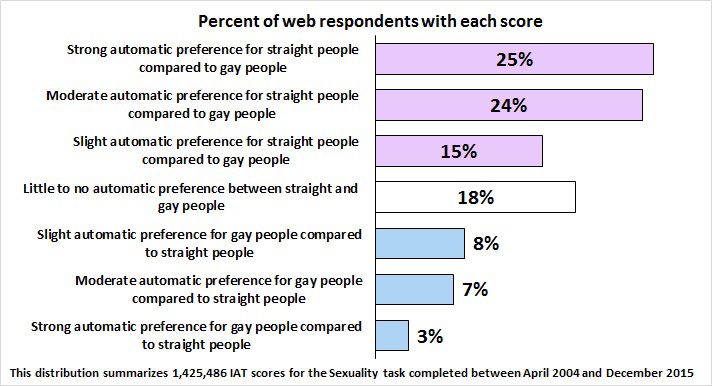
My responses suggested a slight automatic preference for Straight people over Gay people.
https://implicit.harvard.edu/implicit/selectatouchtest.html
Disability IAT Results:
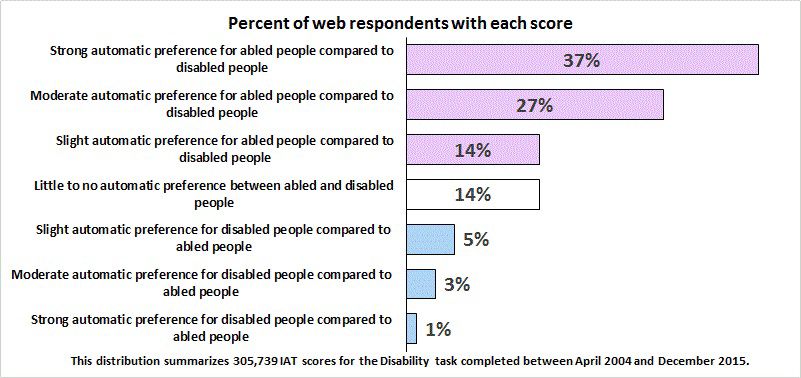
My responses suggested a moderate automatic preference for Physically Abled People over Physically Disabled People.
https://implicit.harvard.edu/implicit/selectatouchtest.html
My Reflection:
Seeing my results was a mix of surprising and expected. I was especially struck by the moderate automatic preference for physically abled people over physically disabled people, which caught me off guard since I see myself as empathetic and open-minded. But looking back, I realize how deeply social influences and stereotypes can shape automatic reactions, often without me even realizing it.
Reflecting on the test itself, I found the structure pretty eye-opening. The way it paired certain images or words with fast responses felt a bit uncomfortable at times, which made me realize how strong those associations might be. The structure highlighted how automatic preferences can sneak in during quick, split-second decisions, showing biases that may be hard to notice in daily life.
As for the slight preference for straight people over gay people, this result aligns more closely with what I expected, which may indicate the influence of my beliefs and values on my automatic responses. These results remind me to stay aware of my reactions and biases. Reflecting on both the structure and outcomes of the test feels like an opportunity for personal growth.
Credibility/Validity:
Regarding the credibility and validity of the IAT, research provides mixed perspectives. The IAT is widely used to assess implicit biases, especially across race, sexuality, and disability. Its strengths lie in how it can reveal automatic associations that people might not consciously recognize. Studies have shown that the IAT has some predictive validity, meaning it can somewhat predict behavior in social interactions, especially in domains like racial bias (Kurdi et al., 2019). However, critics point to limitations, such as potential variability in results when tests are repeated and questions about its ability to consistently predict behavior.
Reference: https://psycnet.apa.org/doiLanding?doi=10.1037%2Famp0000364
Video reflection:
The video really highlights how deeply ingrained bias can be in our everyday lives.
Binna Kandola explains how just a name or how someone looks can shape how we see him/her, often based on stereotypes that we don’t even realize we hold. He even shares his own funny but revealing moment when people called him “Mr. Tandoori” instead of “Kandola” a reminder that bias is everywhere, even in small details. By acknowledging that we all have these biases, and taking a step back to think before reacting, we can make fairer, more thoughtful decisions.


Provide Feedback