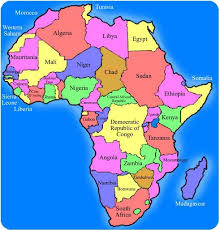
How ‘African’ is Northern Africa?
When I read “How ‘African’ is Northern Africa?” on Global Voices, I expected a straightforward discussion of geography. Instead, what unfolded was a much deeper and more personal inquiry into how people define identity, belonging, and history. At the heart of the article is a question that challenges common assumptions: Is Northern Africa really considered “African”? What seems obvious on a map becomes surprisingly complicated when we look at language, culture, politics, and self-identification. The Sahara Desert, for example, isn’t just a physical boundary, but also a symbol of social and historical divides between Sub-Saharan Africa and North Africa, especially in how others perceive these regions and how people living there see themselves.
The article made me reflect on my own beliefs and how I identify myself, and from there I began to challenge my preset labels. I remember when I was in preschool in Scotland, I went to my friends and told them I was African because I wanted to be “different.” The responses I got align with how many Egyptians view themselves today. They were all like, “Noooooo, of course not, Jana.” I thought I was being clever because I was playing on a “technicality” , that Egypt just happens to be on the continent of Africa. But both my environment and I segregated being Egyptian from being African. Looking back, I can assume this had to do with race: my skin tone and features do not match those associated with other regions of Africa. This complements what the article mentions when it states that “the divide also has to do with the perpetuation of hierarchies of value in terms of skin color, class, and race.”
To be African, one is often expected to align with a stereotype of braided or afro hair, dark skin, big lips, and so on. It’s similar to when someone says “Asia” and people automatically think of China, Japan, Thailand, Malaysia, etc. Although their cultures are all unique, with different languages and traditions, they are grouped together because they fit a certain stereotype. Since India does not follow that stereotype, it is often excluded from the “Asian” group.
The article also states that “Africa is diverse and we should celebrate that, instead of putting a label on what an African is,” which I think sums up the concept very well. Diversity is beautiful. However, differences can scare people, which I believe contributes to this divide. People tend to stick to what is familiar, whether in mindsets or physical traits. Dr. Lucy, from a somatic healing seminar, discussed this idea , that sticking to what is familiar feels safe. I think this can be applied to identity as well. As Egyptians, we may prefer to identify with other Arabs due to shared language and, potentially, traditions. There is likely fear tied to the rejection of the “African” title, possibly stemming from an unwillingness to be associated with stereotypes people reject, such as poverty and starving children (“the poor kids in Africa.”)
Overall, I don’t know if one can just naturally shift their perspective on themselves after reading an article, so I likely still would identify as an Arab rather than African, but it’s not out of shame. I do agree with the aspect of identifying with what is compatible with me. If my traditions align with being Arab, then I think it is perfectly valid to say that I’m Arab. But am I African, YES.
The article refered to is : https://globalvoices.org/2018/05/28/how-african-is-northern-africa/


Provide Feedback