Ikigai
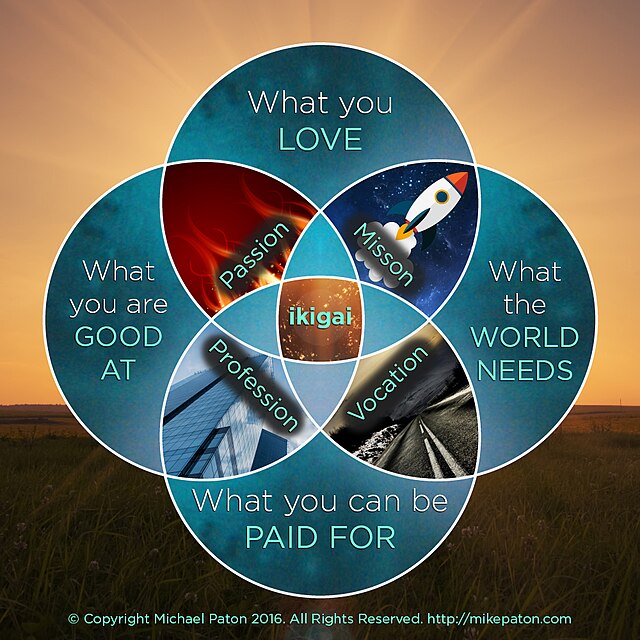
The ikigai was conducted following the diagram below:
Working through the Ikigai framework helped me clarify how my interests in psychology, philosophy, and human behavior can be translated into something practical and meaningful. Instead of thinking in terms of careers or income, reframing the “what you can be paid for” section as “what I can make an educational game out of” pushed me to think about how my skills and passions could become an interactive learning experience.
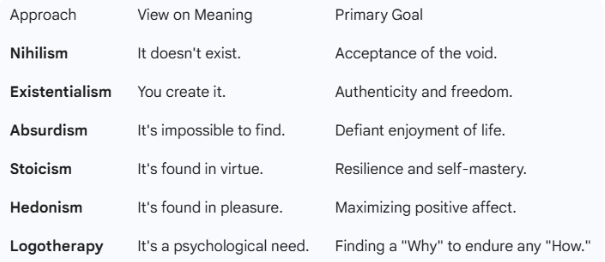
When going through this with ChatGPT I didn’t really get very far in terms of deep ideas for the game. I listed philosophy and psychology in many sections of the ikigai so many vague concepts relating to that came up. One that stood out to me was a quiz to help people understand their own approach towards life. When I say approach towards life I mean the different psychological processes that most people follow. A simplified table for the approaches can be seen below:
However, when coming up with scenarios I found that I couldn’t really think of any on my own as this was not a topic I am too well versed in. In addition to this, Dr Maha drew my attention to how most of the good games that I played as part of the course were ones that delivered a story and allowed you to be immersed in it so back to the drawing board I went.
During this setback I had the time to play a game called “losing a parent” that Dr Maha had recommended and it inspired me to reflect on my own experiences as I have also lost a parent. But when playing the game I found that my mindset was quite different from that of the game developer and there wasn’t at all the mention of the legacy that is passed on by the deceased, which came as a surprise to me as it is a driving force in my life that influences every decision I make. Which finally brought me to the idea of making a game on the experience of carrying that legacy and all that it comes with. I then turned back to ChatGPT and was able to come up with a list of 10 main talking points to think of scenarios for that heavily resonate with me and that I believe could resonate or at least teach something to others.
Portions of this work were supported by ChatGPT (OpenAI, 2026) as a writing and editing aid. The author takes full responsibility for the final content.


Provide Feedback