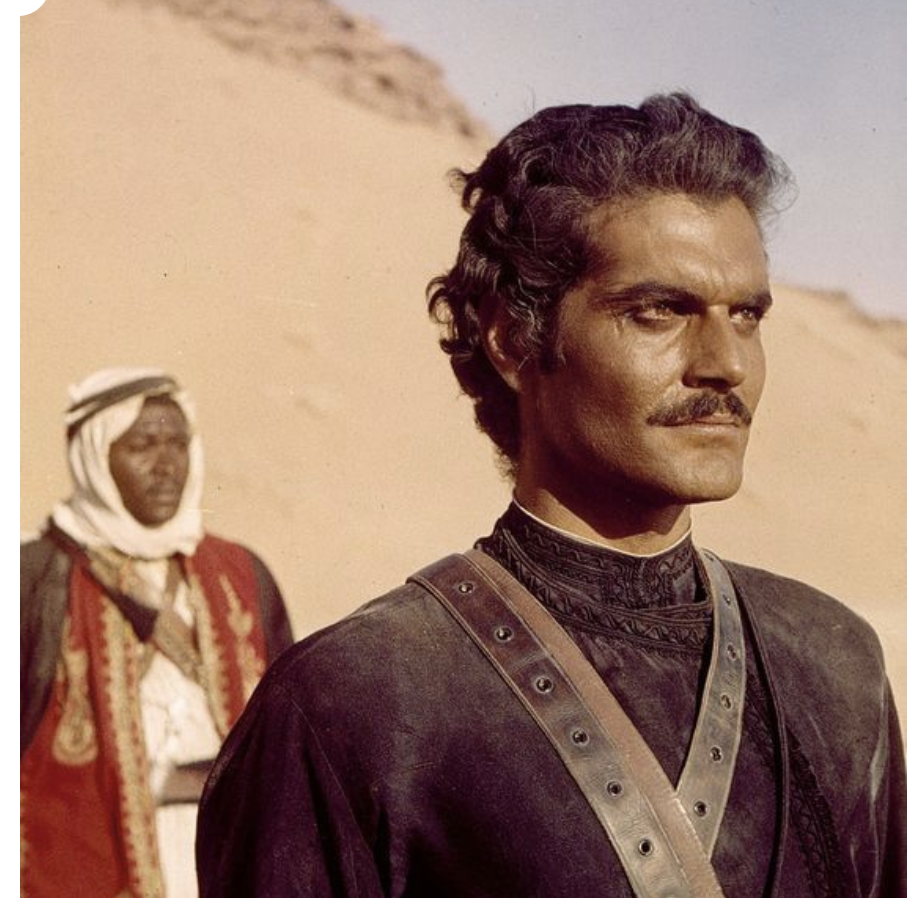
When I first read “How Arabs Are Being Represented in Entertainment” in my Rhet 1010 class, I was really shocked. The theme of the course was cinema, but I’m not someone who watches a lot of Hollywood movies, so I had never thought about any of this. To me, movies were just entertainment. I honestly assumed that people in the West saw Arabs as normal people, the same way I see them. That was the only story I had in my head, and this article broke it.
The facts are what stayed with me. The article says a study of over 900 films found that Arabs were almost always shown as “the enemy,” and another study found that 70 percent of Middle Eastern characters in series were terrorists, soldiers, or tyrants. The writer also talks about being asked abroad if women in Egypt party, or why her English is so good. As an Egyptian, I could feel that. Those questions don’t come from nowhere. They come from seeing the same image over and over again.
In class, we also watched short clips from movies that proved the article’s point. One was True Lies, where the villains are Arab terrorists with no personality and no reason, just “the enemy.” The other was The Mummy, which hit closer to home because it takes place in Egypt. It showed my country as a place of curses and danger, where Western heroes arrive to save the day. Even in short clips, it was clear that the Arab characters were there to be feared, and nobody in the story questioned it.
It made me angry because I know what real Arabs and Egyptians are like. We are students, doctors, engineers, and families, and we are as different from each other as any other people. The article also explained that Hollywood treats “Arab” and “Muslim” as the same thing, even though our region has many religions and traditions. Seeing the gap between the screen and my real life made me feel sad and a little invisible.
Since then, I think more about what I watch and where my opinions come from. When I see a film about a country or culture I don’t know, I ask myself: who is telling this story, and who is missing from it? I also don’t trust that what I see on screen is the truth about a people anymore, because I know it wasn’t true about mine.
What I noticed is that in film, Arabs are usually the villain, the extremist, or the oppressed woman who needs a Western person to rescue her. A show like Ramy is different because it shows a real, normal Arab character, but it’s very rare. The article says that for every Ramy, there are ten stereotyped portrayals like Elite and Iron Man. So the real problem is not that one stereotype exists. It’s that it’s the only story most people see, so they start to believe it’s true.
Article link: https://egyptianstreets.com/2023/03/22/how-arabs-are-being-represented-in-entertainment-are-orientalist-tropes-still-pervasive/ This reflection was proofread with AI assistance (Anthropic, 2026). Anthropic. (2026). Claude (Sonnet 5.5) [Large language model]. https://claude.ai


Provide Feedback