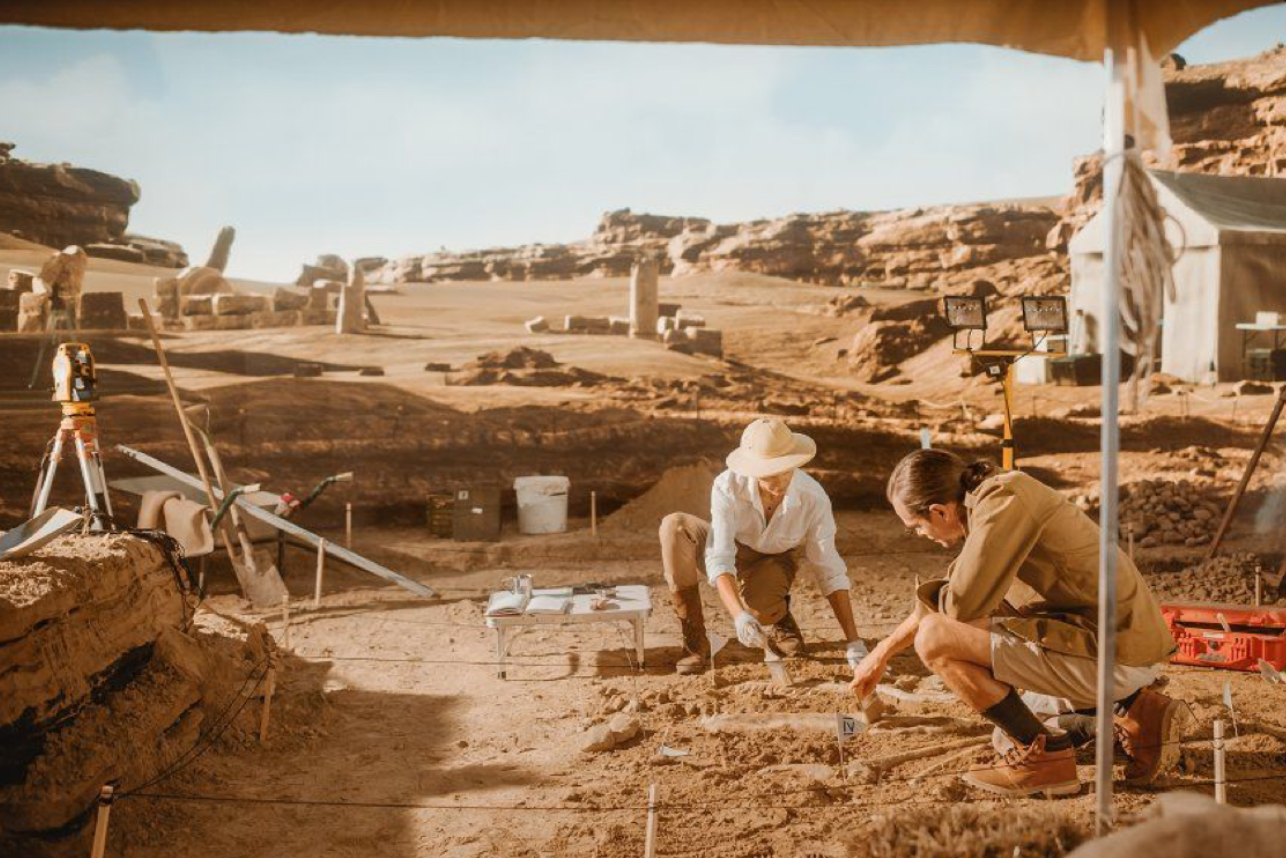
What I Thought I knew
Imagine digging through an ancient tomb, not knowing what you’ll find. That’s how my journey through this course felt—every video, reading, and activity was a new layer, revealing pieces of my identity, my worldview, and how I connect with people across cultures.
How does Language shape the way we think
The treasure I found was a ted talk Video on How Language Shape the Way We Think One idea from this video really struck me: “To have a second language is to have a second soul.” As someone bilingual, I’ve always felt more expressive, confident, and clear in English than in my native Arabic. This made me intellectually realize that language doesn’t just convey ideas it shapes how we see the world and even how we experience ourselves. I discovered that my hybrid identity, balancing Sudanese and Western cultural influences, is tied closely to the languages I use daily. Why this treasure has helped me (Why it helped me learn) The video helped me understand that language is more than communication; it’s a tool for self-expression and cultural identity. It gave me words to articulate why I feel a “different self” in Arabic versus English and showed me how my identity shifts depending on the lens I use.What other loots I am looking for (Questions I still have) :
How much of my identity is shaped by language versus culture? Can interacting in another language with international peers reveal parts of myself I haven’t yet discovered?
How it will enrich my Soliya experience:
Understanding this will help me notice how language affects communication across cultures. I can pay attention to how others express themselves and reflect on how my own words and language use influence the conversation and my sense of self.
What kind of Asian are you ?
The Treasure i found Through this activity, I saw how subtle acts—like teachers expressing surprise at Sudanese students’ English or strangers touching my cousin’s hair in Japan—carry bias and assumptions. I learned intellectually that microaggressions are not random; they are small, often unconscious ways people reinforce stereotypes and inequality. Each experience revealed something about how my identity is perceived and how assumptions are projected onto me because of where I come from or how I look. Discovering this treasure has helped me learn because It showed me that even subtle biases can be deeply impactful, and that recognizing these patterns helps me think critically about how societies and individuals assign value to different identities.However there is still some loot I am in search of
How do microaggressions differ across cultures, and how do people perceive them differently depending on their own backgrounds?
How it will enrich my Soliya experience:
I can approach intercultural conversations more thoughtfully, noticing subtle assumptions and ensuring I communicate in ways that respect others’ identities while advocating for fairness and understanding.
Lina Mounzer, Finding Truth and Beauty
The treasure I found was the Reading – Lina Mounzer, Finding Truth and Beauty. I was captivated by the line: “They gather their children close and call their husbands… carrying the memory of all that they leave behind in their hearts and on their tongues.” This made me reflect on how stories and memories preserve identity even when people lose homes or physical spaces. Another line, “It is an action that is at its heart, inaction,” helped me see the limits and responsibilities of witnessing suffering. Intellectually, I realized that identity and humanity are carried through experiences and storytelling. Each annotation I made felt like uncovering a treasure about empathy and resilience.This treasure helped me learn because the reading connected abstract ideas about identity and empathy to lived experiences of people affected by conflict. It helped me recognize the importance of storytelling in shaping understanding across cultures. Some loot i am still in search for ;
Can language ever fully convey the pain and experiences of others? How do we ensure our empathy doesn’t stay superficial when interacting with diverse perspectives?
How it will enrich my Soliya experience:
I can approach conversations with international peers more mindfully, valuing their stories and experiences, and reflecting on how our identities intersect with the narratives we carry.
The danger of a single story
The treasure i have found in this activity was Adichie’s idea of the “single story” was a revelation. She explains how the first story we hear about a person, place, or culture becomes the basis for assumptions that can linger even after we hear other perspectives. I realized intellectually that stereotypes and bias often originate from incomplete narratives. This video helped me reflect on my own identity: growing up exposed to multiple cultures, I am less likely to accept one story blindly—but I still need to actively seek and share multiple perspectives.
Finding this treasure has really helped me learn it
It clarified how biases form and persist, showing me that even true facts can be harmful if they are the only story told.
Some loot i am still in search for
How can I help ensure that single stories are challenged in conversations with peers from different countries?
How it will enrich my Soliya experience:
I can approach discussions with international students seeking multiple perspectives, asking questions, and sharing nuanced views rather than relying on assumptions. This awareness will help me engage as a thoughtful and open-minded global citizen.
Understanding Depression Through Digital Narrative Games
The treasure i have found was the A Digital Narrative Game on Depression
The game taught me that depression isn’t just sadness—it can make even small actions feel impossible, putting choices “out of reach.” Intellectually, I learned that empathy requires understanding these invisible barriers. Each choice I couldn’t make in the game helped me see the cognitive and emotional constraints that others experience daily, which broadened my understanding of human experience.
This treasure helped me learn It made abstract concepts like empathy concrete. I could experience the limitations first-hand, which deepened my understanding of mental health, human behavior, and interaction.
Some loot I am still in search for
How do cultural expectations and stigma shape the ways depression and other mental health challenges are perceived internationally?
How it will enrich my Soliya experience:
In discussions with international peers, I will be more aware that people’s choices and expressions may be shaped by invisible challenges. This will help me listen more thoughtfully and respond with empathy, respecting diverse experiences
What i learned about my self
As I keep digging through this excavation site class by class I’ve started to discover some pretty interesting things about myself. Thanks to my travels, my friends, and the different schools and platforms I’ve studied in, I’m already a pretty diverse and open-minded person. That made this learning experience a lot easier because I’m used to interacting with people from all sorts of backgrounds. Each new concept felt a little easier to understand since I already see bits of it in my daily life.
I’ve also learned a lot about how I view the world. A lot of the mistakes people make when communicating across cultures? They’re usually not really anyone’s fault it’s more about the system they grew up in. If I hadn’t had the experiences I’ve had, I know this course would have been much harder. It made me realize that so much of what we do subconsciously, without thinking is passed down from culture and environment.
That said, I still have questions for myself. For example, here in Egypt, there’s a language barrier in Arabic. Simple things, like taking an Uber or ordering at a restaurant, become tricky if I don’t speak the local way. So I keep asking myself: how am I going to overcome this? Intercultural conversations with educated people from similar backgrounds are one thing, but talking with someone from a completely different background different beliefs, different experiences is a whole other challenge.
I think my identity will shape my Soliya experience in a really positive way. I genuinely love learning about people, cultures, and places, so I think that curiosity and openness will make the experience even richer. I want to use it to understand other people’s perspectives. If I’m speaking Sudanese Arabic in Egypt, I want to truly understand the person I’m talking to. And in Soliya, I hope people speak in their own dialects I want to really hear them. That, in turn, will help me embrace my own language and identity even more, and show me that communicating in my own way isn’t a problem it actually makes the experience richer and more meaningful
Learning to see others differently
What I’ve learned in terms of interacting with people who are different from me is that keeping an open mind is key. People don’t process things the same way you do, and they’re not used to your way of thinking or your nature. So it helps to start slowly, at a moderate pace, so they can understand what you’re saying. I’ve also realized you have to be very conscious about the questions you ask or the jokes you make. Before this class, I didn’t fully notice how unintentional comments things you mean in a good way can sometimes come across badly or even hurt someone.
One question I have about becoming a better global citizen is: how can I make sure everyone feels comfortable speaking up when something really annoys or bothers them? I’ve noticed that, especially when people are trying to be nice, their efforts can sometimes backfire. For example, in Egypt, people often go out of their way to welcome newcomers or show kindness, and I really appreciate that—but sometimes, you just want to live your normal life without extra attention or pity. That made me realize that understanding the little things that irritate people from different cultures is really important if you want to be respectful and mindful.
I hope to use my Soliya experience to learn about these “pet peeves” directly from people themselves. By asking questions and paying attention to what annoys them, I can gain more reliable insight than just guessing based on stereotypes or assumptions. I plan to carry this understanding with me in every future interaction with people from similar or different cultures. This is how I want my Soliya experience to help me become a more thoughtful, aware, and truly global citizen.
When conversations get difficult
If the issue of Palestine or the current conflicts in the Middle East came up in Soliya, I think the most important thing would be having some background knowledge about the people you’re talking to—their nationality, culture, and experiences. I’ve personally experienced situations where a lack of awareness can be really uncomfortable. For example, I was once discussing my dream destination for an internship, and someone suggested a country that, from my perspective, is responsible for atrocities in my home country. That felt deeply offensive, even if they didn’t mean it that way.
So, I think having some context from the start can prevent awkward or disrespectful situations. Personally, I’m fine with people having their own opinions, as long as they don’t force them on me. This is a global discussion, and respecting each other’s perspectives is key. I also think there should be safeguards: if a conversation gets too disrespectful or heated, there should be a way to step out and pause, so no one is personally attacked for their stance.
If I were able to direct the discussion, I’d probably try to cool things down by gently shifting to a topic I’m passionate about, something that helps reset the tone, and then continue the conversation in a more productive, respectful way. The goal is to learn, exchange perspectives, and keep the dialogue professional and safe for everyone.
Video Reflection
The main idea of The Danger of a Single Story by Chimamanda Ngozi Adichie is that a single narrative can quietly shape the foundation of how we understand people, cultures, and places. The first story we hear about something often becomes the basis of our knowledge, and from that base, our minds begin to form assumptions, stereotypes, and expectations. What makes this dangerous is that even if we later encounter different perspectives, the initial story does not fully disappear it lingers in the background and continues to influence how we think.
A key concept that deepened my understanding was the idea of the “single story” itself. It made me realize that exposure to only one perspective, especially at the beginning, can feel like truth rather than partial truth. This connects to what we learned in class about stereotypes and bias, where people are often judged based on limited or generalized information about where they come from, what they do, or how they live. These judgments are not created randomly they are often built on a single story that was never challenged.
However, I also reflected on my own thinking and realized that I tend to approach situations with multiple perspectives. For example, even if I hear a negative opinion about a place, I still prefer to experience it myself because I understand that perception differs from person to person. Growing up with exposure to different cultures made me less likely to fully accept one narrative without questioning it.
At the same time, the video made me think more critically about the difference between incomplete truths and false narratives. For instance, it is not wrong to acknowledge that some African communities live in huts this is a reality. But the problem arises when that becomes the only story told, erasing the diversity and development that also exist. A single story is not always false, but it is always incomplete, and that incompleteness is what makes it dangerous


I soooo loved your use of the excavation site metaphor! Where did this idea come to you?