Dear Future CORE 2096 Student,
Before you take this course, I want you to know that it is not the kind of class where you only sit, listen, memorize, and leave. CORE 2096 is a course where you learn by playing, discussing, creating, reflecting, and sometimes being placed in situations that make you think differently about yourself and other people. By the end of the semester, I realized that the course was not only about creativity or digital tools. It was also about empathy, identity, intercultural communication, and learning how to use technology more critically.
What I Learned About Myself
One of the first assignments that helped me reflect on myself was the photo-sharing activity. I shared a photo from my family trip to Siwa, a place I described as one of the purest and most peaceful places I had ever visited. It was a simple start, but it helped me connect the course to something personal: family, memory, peace, and happiness.
Another assignment that showed me more about myself was my ALTCV, titled “All About Me!” Instead of making a formal CV, I had the chance to show parts of my identity that are usually not included in academic or professional documents. I included basketball, horses, traveling, family and friends, nature, peaceful places, and my goal of graduating from AUC and becoming an accountant. This assignment reminded me that I am more than my major or future career. My hobbies, memories, relationships, and dreams are also part of who I am.
The digital narrative games also taught me about myself because they showed me how I react when I am placed inside difficult situations. In Spent, I learned how poverty can make every small decision feel stressful. Choices about rent, food, work, a child, a pet, and basic needs became difficult because there was never enough money or stability. What shocked me most was that a small decision, such as supporting a petition for higher wages, could lead to losing a job. This made me more aware of the stability I usually take for granted.
The BBC Syrian Refugee Simulation affected me in another way. It showed me that refugees often have to make decisions where every option includes danger. There was pressure in every choice: whom to trust, where to go, how to protect family, and how to survive with limited money. This helped me understand refugee experiences in a more human way, instead of only thinking about them as news stories or statistics.
What I Learned for My Academic Life
Academically, this course taught me that reflection makes learning stronger. The class blog was useful because all of our assignments were organized in one place, and I could return to them later to see how my thinking changed throughout the semester. I also liked seeing classmates’ work because it made the course feel more shared and interactive.
The self-assessments were also important. In the middle and at the end of the semester, we had to think about our own performance, effort, and learning. This made me take more responsibility for my progress. Instead of only asking, “What grade did I get?” I had to ask, “What did I actually learn, and how much effort did I put into the course?”
The AI literacy presentation was another important academic experience. I presented Module 4: Creative + Confident AI Literacies, and the main lesson I learned was that confidence with AI does not always come before using it. Sometimes confidence grows after experimenting, making mistakes, and trying again. I also learned that AI does not need to produce a perfect answer to be useful. It can help with brainstorming or starting an idea, but the student still needs to evaluate, edit, reject, or improve what AI produces.
This changed how I think about using AI in academic work. I can use AI to brainstorm, organize ideas, or generate practice questions, but I should not depend on it blindly. I still need to check accuracy, use my own judgment, and understand what parts of the work are truly mine.
What I Learned for My Social Life
For my social life, the biggest thing I learned was empathy. Many activities in the course showed me that people’s situations are often more complicated than they seem from the outside.
The Gender Equality game showed me how stereotypes about girls can begin very early, from toy choices to career expectations. The Peer Destruction game showed me that body image struggles can affect people deeply, even when others may not understand their pain. These games made me think about how harmful comments, assumptions, and social pressure can be, especially toward women and girls.
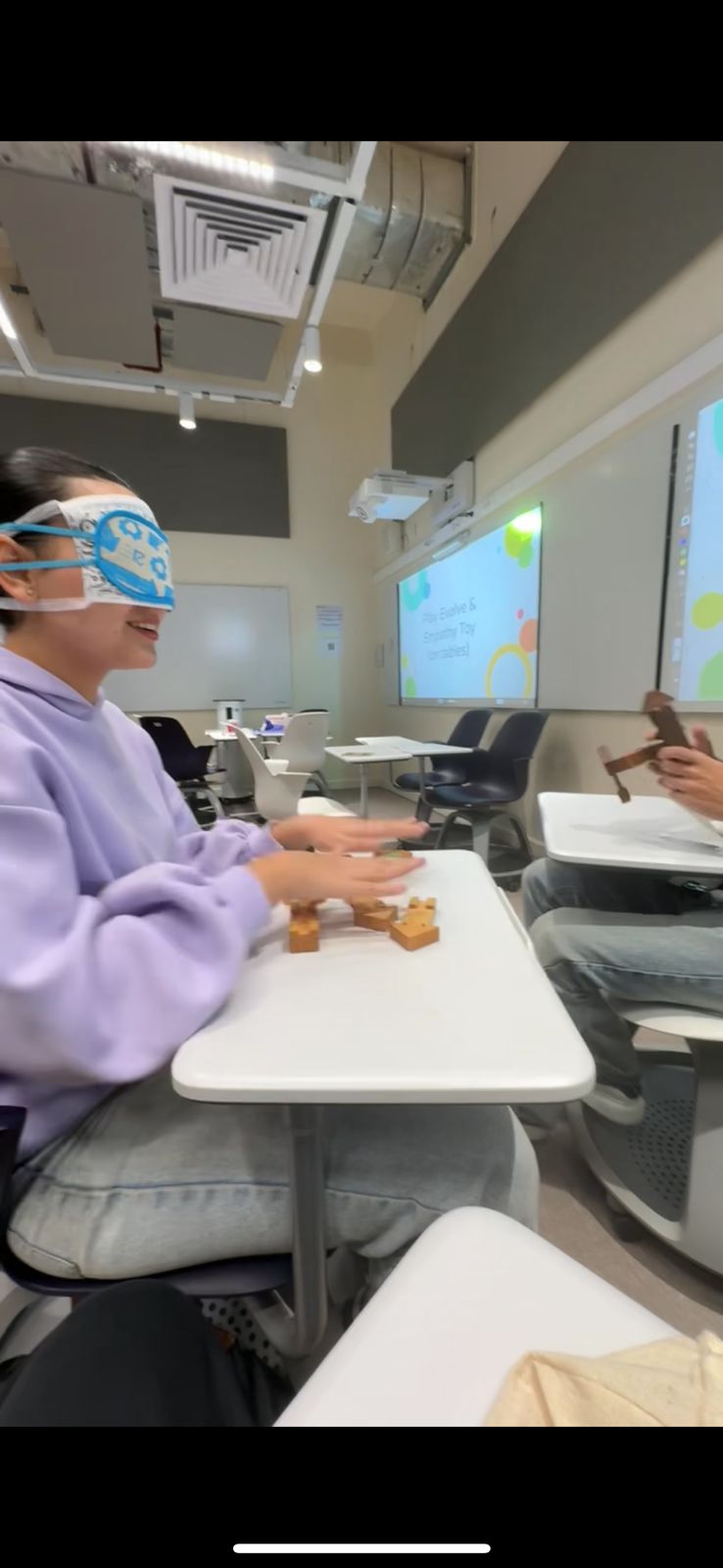
The Empathy Toy was also one of the most useful in-class activities. Being blindfolded while another person described a block structure forced me to depend on listening, trust, and clear communication. It showed me that communication is not only about speaking. It is also about patience, understanding, and making sure the other person feels supported.
This is something I will use socially because it reminded me not to judge quickly. People may be dealing with stress, insecurity, pressure, or unfairness that I cannot immediately see.
What I Learned for My Career
As an accounting major, the assignment that connected most directly to my future was AI in My Profession. Before this assignment, I thought about AI in a general way, but this task helped me understand how AI is already affecting accounting. I learned that AI is used in data entry, auditing, tax preparation, fraud detection, financial analysis, budgeting, forecasting, and reports.
However, I also learned that AI cannot fully replace accountants because accounting is not only about calculations. It also requires judgment, ethics, responsibility, and understanding real business situations. For example, AI can detect an unusual transaction, but an accountant still needs to decide whether it is fraud, a mistake, or a normal business activity.
My interview with Dr. Nariman Kandil made this clearer. She explained that AI is already being used in accounting education and research through tools like Gemini, SciSpace, and Consensus. She also explained that in auditing, AI can now perform some tasks that junior auditors used to do, such as reviewing financial statements and detecting possible errors or fraud. At the same time, she warned that AI can give inaccurate answers, misleading calculations, or wrong accounting methods.
This taught me that as a future accountant, I need to develop both accounting knowledge and AI skills. I need to know how to use AI, but also how to question it, check it, and take responsibility for decisions.
Three Things I Created That Show My Learning
The first thing I would show someone is my ALTCV: “All About Me!”
Link: [https://reflect.creativitycourse.org/published/all-about-me-altcv/]
I would choose this assignment because it represents the personal and creative side of the course. It allowed me to tell my story differently from a normal CV. Instead of only listing achievements, I showed my interests, values, goals, and identity.
The second thing I would show is my Playing Games Part 1 & 2 reflection.
Link: [https://reflect.creativitycourse.org/published/playing-games/]
This reflection shows how much I learned from digital and analogue games. I reflected on how each game made me feel, what I learned, and what I would improve. Through the games, I learned about poverty, migration, gender inequality, body image, COVID learning, communication, and empathy.
The third thing I would show is Full Court Balance, the narrative basketball game I created with my partner.
Link: [https://reflect.creativitycourse.org/published/basketball-game-draft-2/]
This game is about pressure, fairness, favouritism, teamwork, confidence, and emotional struggles in competitive sports. Players choose between three characters: the Popular Player, the Connected Rookie, and the Veteran. Each character faces a different type of struggle during the basketball season.
This project mattered to me because it connected directly to my real life. My partner and I have played basketball for many years, so the situations in the game were inspired by experiences we have seen or lived through. It also taught me how important feedback is. In the first draft, the professor pointed out that the paths were too similar for each character. In the final draft, we changed the structure so each character had a more unique storyline and emotional conflict.
What I Would Change About the Course
The first thing I would change is giving clearer guidance about AI use in assignments. I learned a lot about AI in this course, but I also realized that students can feel unsure about what counts as acceptable AI support. In my AI literacy presentation, one question I still had was how students can experiment with AI creatively without crossing academic honesty boundaries.
I think the course could include a simple AI-use guide at the beginning of the semester. It could explain what is allowed, what needs disclosure, and what is not allowed. For example, it could separate using AI for brainstorming from using AI to write final answers. This would help students use AI more responsibly instead of either avoiding it completely or using it without knowing the limits.
The second thing I would change is giving more time for the final narrative game project. Creating Full Court Balance was one of the most useful assignments, but it needed more time because building different paths, consequences, character choices, visuals, and endings is not simple. The assignment required us to create a decision-based game, include scenarios and consequences, revise after feedback, cite sources, and consider accessibility. More time would allow students to make the games deeper, more polished, and more meaningful.
The third thing I would change is adding more structured reflection after intercultural experiences like Soliya and the Tahrir trip. These experiences were valuable, but they would have been even stronger if we had more guided discussion afterward. For example, after each Soliya session or the Tahrir visit, we could have answered questions about what surprised us, what challenged us, and how the experience connected to course themes. This would help students process the experience more deeply instead of moving quickly to the next assignment.
Who Should Take This Course?
A person who is willing to reflect, participate, create, listen to others, and think critically about technology should take this course.
Digital Tools I Learned From
One digital tool I liked was the class blog. It kept all assignments organized and allowed us to see classmates’ work. This made learning feel more public and connected. It also helped me prepare for the final reflection because I could look back at my previous work and notice what I learned.
Another tool I liked was Google Slides, especially for creating Full Court Balance. Before this assignment, I mainly saw Google Slides as a presentation tool. Through the game project, I learned that it can also be used to create interactive storytelling and decision-based learning.
I also learned a lot from AI tools, especially ChatGPT. In the games assignment, I used AI with my Ikigai and VIA results to think about possible narrative game ideas, and the idea that stood out was connected to basketball, teamwork, pressure, and empathy. In the AI literacy presentation, I learned that AI can be useful for creativity and confidence when it is used as a starting point, not as a replacement for human thinking.
For my future career, the AI in My Profession assignment helped me understand how AI may affect accounting. I learned that AI can support auditing, research, tax work, financial analysis, and reporting, but it still needs human judgment and ethical responsibility.
A tool I became more critical of was AI in general after listening to Timnit Gebru’s podcast and watching Model Employee. This assignment taught me that AI is not only about convenience or intelligence. It can also involve hidden human labor, workplace surveillance, privacy concerns, and power imbalances. Because of that, I will try to use AI more carefully by checking information, protecting my privacy, and asking who benefits or who may be harmed by a technology.
The classroom technology itself was also important. Zoom allowed us to attend Soliya sessions and the somatic healing session. In this course, Zoom was not only a meeting platform; it became a way to meet people from different countries, listen to different perspectives, and participate in activities outside the physical classroom.
A tool I did not like as much was Bury Me, My Love, not because the idea was bad, but because the beginning felt slow to me. I appreciated the emotional purpose of the game and the chat format, but I found that the pacing made it harder for me to stay focused at first.
Intercultural Experiences
Soliya was one of the most meaningful intercultural experiences in the course. Through several Zoom sessions, I met people from different countries and discussed different topics with them. At first, I felt nervous because I was speaking with people from different backgrounds, but over time the conversations became more comfortable. I learned that intercultural dialogue is not only about speaking. It is about listening without judging, asking respectful questions, and understanding that people’s opinions are shaped by their country, family, media, politics, and personal experiences.
The interview part of Soliya was especially important. I asked questions about how decisions made by the United States affect people in other countries. Lili from Lebanon explained that American decisions can feel personal even when they are made far away because they can affect safety, the economy, opportunities, and regional stability. Marianna from the United States explained that many Americans may not realize how much their country affects the rest of the world because they are focused on issues inside the U.S.
As someone living in Egypt, I related to both responses. Like Lili, I understand that people in the Middle East can be affected by decisions made by powerful countries. At the same time, Marianna’s response helped me see that some people may not understand this impact because they have not heard enough personal stories from other countries. This made global politics feel more human and less abstract.
The Tahrir trip was also meaningful. We visited AUC Tahrir and met students from different countries who came to Egypt to learn Arabic. It was interesting to hear them speak my native language and talk about Egyptian culture. This made me feel proud of Arabic and proud of my country. It also showed me that intercultural learning does not only happen through serious political discussions. It can also happen through language, curiosity, and simple conversations.
The somatic healing session with Luciana was another useful experience. It taught me practical ways to deal with stress, such as breathing, grounding, orienting, tapping, self-contact, and co-regulation. I liked that the session was not only theoretical; we practiced the exercises and learned when they could be used in real situations like exams, meetings, anxiety, or pressure.
What would have made these intercultural experiences better is more reflection time afterward. Soliya, Tahrir, and somatic healing were all valuable, but I think they would have been even more powerful if we had more time in class to discuss what we learned from them and how they connected to the course.
Final Advice to You
So, future CORE 2096 student, my advice is to take the course seriously even when the assignments look unusual at first. A game, a blogpost, a field trip, a Zoom conversation, or an AI activity may seem simple, but each one can teach something different if you actually reflect on it.
This course helped me learn more about myself through the ALTCV and personal reflections. It helped me learn more about others through games, Soliya, and the Tahrir trip. It helped me learn more about my future through the AI in accounting assignment. It also helped me become more critical of technology instead of only seeing it as useful or impressive.
By the end of the semester, I became more aware of how I learn, how I communicate, and how I want to use digital tools in the future. The most valuable moments were the ones connected to real life, because those are the ones I will remember most.
Sincerely,
Malak Ramadan
AI Disclosure Statement
I used ChatGPT to help organize my final reflection, connect my previous assignments to the final reflection questions, and improve the structure and wording.


Provide Feedback