Part 1: My Game Reflections on Empathy and Narrative
1. Spent
- Link: SpentLinks to an external site.
- How I felt: Playing Spent made me extremely nervous. I’m honestly not very good at saving or managing money in real life, so the game immediately stressed me out. Every decision felt heavy. I felt like I was constantly stuck between two bad options. For example, there was a moment where I was holding a 25 dollars vase at work and no one saw me drop it. I had to choose whether to pay for it or do nothing. I chose to do nothing because I needed the money so badly. That decision made me uncomfortable, but it also felt realistic like survival mode. There was also a part where I had to skip my grandfather’s memorial because I couldn’t afford it. That part hit me. It felt like the game was forcing me to choose between basic needs and important personal moments. I lost the first time on Day 24, and when the screen said I ran out of money, I felt defeated and anxious. However, the second time I made it through the month as I have acquired some skills that made me go through it.
- What I learned: I learned how quickly money disappears when you’re living paycheck to paycheck. Even when you try to make “smart” choices, unexpected expenses destroy your plan. The game showed me that poverty is not just about laziness or bad decisions it’s about constantly reacting to emergencies. One mistake or one surprise bill can completely ruin everything. When I played the game a second time, I did better. I had learned to think more carefully, to prioritize needs over emotions, and to plan ahead when possible. That second round showed me that experience helps but it also showed me how unfair the system feels when you start with so little.
- One suggestion for improving the game: I think the game could be better if it added more long-term choices. For example, there could be small chances to learn new skills or get training that helps you earn more money later. This would show how education or support programs can help improve someone’s life over time.
2. BBC Syrian Refugees:
- How I felt: This game was emotionally heavy. From the beginning, I felt anxious because every decision felt like life or death. The hardest part was that the two options given to me were both bad it never felt like there was a “good” choice. I made it to Europe in the end, but only after going through terrifying situations, including the boat journey where food and water were running out. Even though I arrived safely, it didn’t feel like a happy ending. It felt traumatic and exhausting.
- What I learned: I learned that refugees are not simply “choosing” to leave their country. They are forced into impossible decisions. The game showed me how dangerous and unpredictable the journey is. Even when you survive, you lose so much along the way safety, stability, and peace of mind.
- One suggestion for improving the game: I think the game could improve by showing what happens after arriving in Europe. It would be helpful to see the challenges refugees face even after surviving the journey, such as finding housing, learning the language, or getting a job. This would make the experience feel more complete and realistic.
3. Skills Practice: A Home Visit (professionally created):
- Link: Skills Practice: A Home Visit
- How I felt: This game made me feel uncomfortable and emotional while playing. When my character went to Irina’s house and I saw the man (who I assumed was her husband) shouting and acting aggressively, it made the situation feel tense and stressful. When the game showed the bruises on her hands, I felt shocked and concerned for her. Even though it was just a simulation, I felt a sense of pressure because each dialogue choice could either help her or make things worse. The game really made me think carefully about what to say and how to respond.
- What I learned: I learned how important it is to speak in an empathetic and non-judgmental way, especially when someone might be experiencing abuse or mental health struggles. The game showed me that mental health stigma is real, and people may feel ashamed or afraid to open up.
- One suggestion for improving the game: I think the game could improve by adding an end to it in order to see what will happen at the end, I feel like I just watched the problem and there was no solution that was reached.
4. September 7th, 2020 (professionally created):
- Link: September 7th, 2020 Links to an external site.
- How I felt: While playing, I didn’t just feel stressed, I felt transported back to 2020. It reminded me of my high school days during COVID, when everything felt uncertain and exhausting. Even simple things like going to class or talking to someone felt complicated. In the game, small choices felt heavy, and that’s exactly how real life felt back then. We were constantly thinking about masks, distance, germs, online classes, and whether things would suddenly shut down again. The game had all the mental exhaustion and the constant pressure building throughout the day. It made me realize how much we were all carrying at that time, even when we tried to act normal.
- What I learned: I learned that going back to school during COVID wasn’t simple for everyone. Some students were dealing with anxiety, health issues, family problems, or fear of getting sick. What looked like a normal school day on the outside could actually feel very heavy and stressful for someone personally.
- One suggestion for improving the game: The game could improve by giving a clearer sign of how each choice affects the character, maybe through short feedback message.
5. Manufactured evil (Student created):
- Link: Links to an external site.
- How I felt: While playing Manufactured evil , I felt both responsible and challenged. The game made me realize how small everyday decisions, like choosing between plastic and glass bottles or deciding whether to pick up trash, can have bigger environmental consequences. Some choices felt easy, but others made me pause and think about convenience versus responsibility. It also felt empowering to “play as the president” and see how policy-level decisions connect to individual actions.
- What I learned: I learned that environmental problems like plastic pollution are not caused by just one factor. They are influenced by corporations, government policies, and individual behavior. Incentives like tax reductions can encourage companies to use recycled materials, but personal responsibility, such as recycling properly or not leaving trash behind, is just as important. The game showed that even small actions, like choosing the recycling bin instead of the general trash bin, contribute to larger environmental outcomes.
- One suggestion for improving the game: One way to improve the game would be to add clearer consequences for each decision. For example, showing statistics, environmental impact scores, or visual changes (like cleaner beaches) after each choice would make the outcomes feel more realistic and impactful. This would help players better understand how their decisions affect the environment over time.
6. Second-hand depression (Student created):
- Link: Second-hand Depression GameLinks to an external site.
- How I felt: I felt a little emotionally drained while playing because it wasn’t only about Khaled’s depression, but also about how Noha was slowly becoming affected by it. The constant cycle of trying to help, getting ignored, and not knowing what the “right” thing to do is made me feel frustrated. It also made me realize how supporting someone with depression can be confusing and exhausting, especially when your intentions are good but your actions might still make things worse.
- What I learned: I learned that depression doesn’t only impact the person going through it, but also the people close to them. Even supportive behaviors like pushing someone to talk or insisting on plans can create pressure instead of helping. The game showed that understanding boundaries, patience, and timing are very important when dealing with someone who is struggling mentally.
- One suggestion for improving the game: Maybe showing how it affected Khaled’s mood or Noha’s stress level would make it easier to understand the impact of different decisions.
7. Second-hand depression (Classroom Game):
- How I felt: I found the game a bit challenging because some of the emotion cards didn’t have an obvious answer for me. It made me pause and really think about how I actually feel. In some moments, I wasn’t sure what to say, but that pushed me to reflect more on different situations in my life and how they affect my emotions.
- What I learned: I learned that I don’t always take the time to understand or label my emotions in daily life. The game made me realize that sometimes I need to slow down and think about why I feel a certain way instead of ignoring it or moving on quickly.
- One suggestion for improving the game: One way to improve the game would be to add example prompts on some of the cards to help players who may find it difficult to think of situations right away.
Comparison reflection:
Even though all the games were about empathy, they each showed it in a different way. Games like Spent and BBC Syrian Refugees focused on survival and making stressful decisions with limited resources, which made me feel anxious and pressured. The empathy in these games came from understanding how difficult it is to live in those situations. Other games like Skills Practice: A Home Visit and Second-hand Depression focused more on communication and emotions. In these games, I had to think carefully about what to say and how my actions might affect someone else, which showed that empathy is also about being patient and supportive. Games like September 7th, 2020 and Manufactured Evil showed how small everyday choices can have bigger effects over time, whether on personal wellbeing or the environment. Finally, the classroom game Cloud 4 was more personal because it made me reflect on my own emotions instead of making choices for a character. Overall, each game helped build empathy in a different way, either through survival challenges, communication, or self-reflection.
PART 2: My own background research on the topic of my own digital narrative game
VIA Survey:
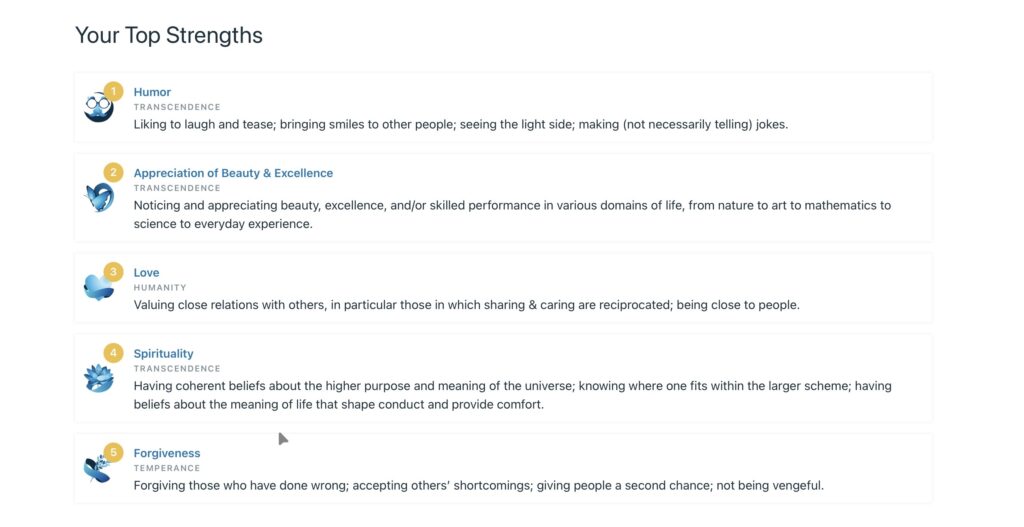
https://chatgpt.com/s/t_69a387a62b808191a2a70b7502510255
After looking at the game ideas that the AI suggested based on my VIA strengths, I feel like I really relate to them because they reflect parts of my personality and the way I see the world. Ideas like using humor to deal with challenges, focusing on relationships, forgiveness, and finding meaning in everyday life feel very personal to me. I feel like these themes are already a big part of how I handle situations in real life, especially when it comes to understanding others and staying positive during difficult times.


Provide Feedback