
Welcome – In this blog, I will compare different research tools, including Perplexity, ChatGPT, DeepSeek, and Connected Papers. I will share my experience using each one, highlighting what worked well and what didn’t. Some tools were easy to use and gave accurate information, while others were confusing or not helpful for research. I will also discuss the pros and cons of each tool and which one I think is the best for finding reliable information.
1- ChatGPT
My Experience Using ChatGPT for Research
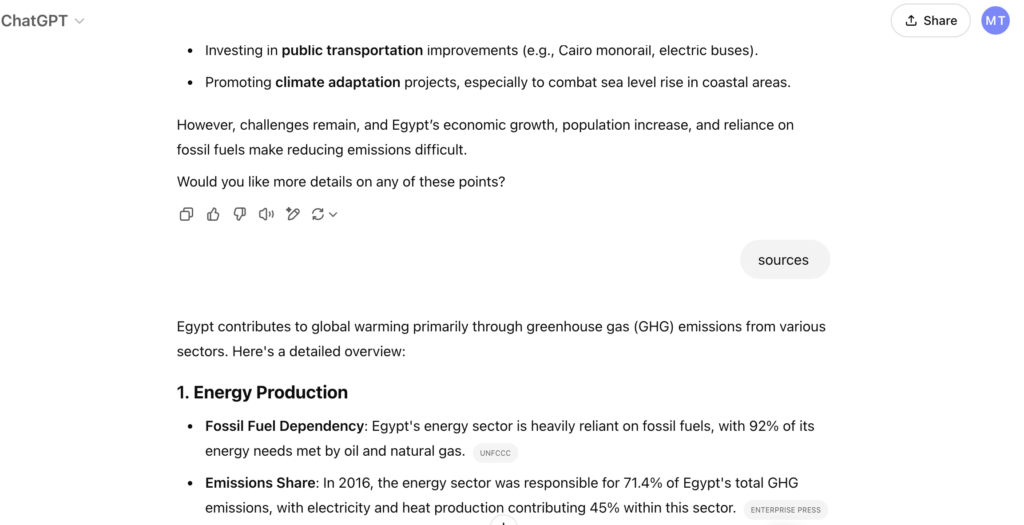
When I used ChatGPT for research, I noticed that it didn’t provide sources unless I specifically asked for them. Even when it did, most of the sources were not academic. The only academic source it provided had information that wasn’t actually in the original source, which made it less reliable for research.
Pros & Cons of ChatGPT
✅ Pros:
- Great at explaining topics in an easy-to-understand way.
- Can summarize long texts quickly.
❌ Cons:
- Doesn’t provide sources unless requested.
- The sources are not always academic or reliable.
- Sometimes makes up information (gives details that aren’t actually in the source).
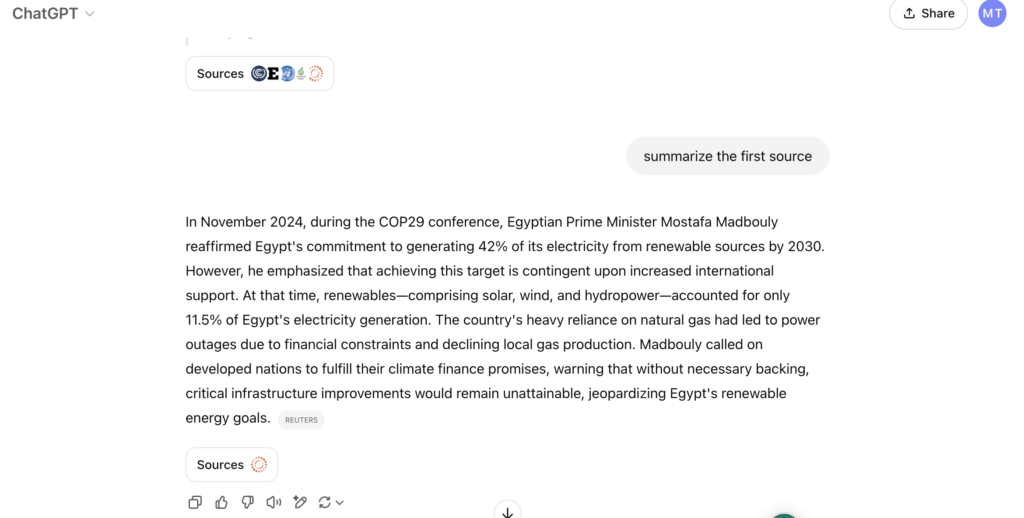
When I asked ChatGPT to summarize a source, the summary was too long and included unnecessary details. It didn’t get to the point quickly and was sometimes repetitive. While the main ideas were there, the summary could have been shorter and clearer to make it easier to read and understand.
The Summary it Provided
It didn’t provide sources unless I asked
2- Perplexity
My Experience Using Perplexity
I tried using Perplexity for research, and I found it to be accurate and reliable. The information it provided was always supported by sources, which made it easy to check for credibility. Compared to other search tools, it felt fast and efficient, giving direct answers without unnecessary extra details.
It uses accurate sources, and what it provides is written in the source.


Pros & Cons of Perplexity
✅ Pros:
- Provide accurate and well-supported answers.
- Includes sources for every response.
- Faster than traditional searches.
- Simple and easy to use.
❌ Cons:
- Sometimes, the answers are too brief.
When I asked for a summary, it gave me one; it was a clear summary but too basic. It just lists facts without explaining why they matter. It also doesn’t give details about Egypt’s climate policies or what actions were taken. A better summary would make the information easier to understand and more meaningful.

3- DeepSeek
My Experience Using DeepSeek
When I used DeepSeek, it gave short answers and didn’t include sources unless I asked. Even when it did, the sources were not always detailed or reliable. It felt more like a quick-answer tool rather than something for deep research. It’s okay for getting a basic idea about a topic, but not the best for academic work.

Pros & Cons of DeepSeek
✅ Pros:
- Fast and simple answers.
- Easy to use.
- Good for basic explanations.
❌ Cons:
- No sources unless requested.
- Too brief, lacks depth.
- Not reliable for research.
When I asked DeepSeek to summarize a source, the summary was too short and lacked important details. It didn’t provide sources unless requested, and even then, the sources were not always relevant. The response felt oversimplified, making it not very useful for research or understanding complex topics.

4-Connected Papers
My Experience Using Connected Papers
I tried using connected papers, but I found it very hard to use and too complicated. When I searched for a topic, it gave me unrelated research papers, which didn’t help at all. It also generated a weird graph that didn’t make sense and wasn’t useful for understanding the connections between papers. Overall, I didn’t like it because it was confusing and didn’t provide helpful results.
The Sources it gave me

Pros & Cons of Connected Papers
✅ Pros:
- Might help with finding related papers, but only if it works correctly.
❌ Cons:
- Very complicated and hard to use.
- Unrelated papers appear in searches.
- The graph is confusing and not useful.
- Not helpful for finding specific research topics.
The Complicated graph it gave me

Connected Papers has no option to ask for a summary and is hard to use. It gives a confusing graph instead of clear information, making it not helpful for research.


Provide Feedback